Generative AI in various aspects of life

Generative artificial intelligence that has evolved and become part of the modern world, interlocking with various sectors. From repetitive work actions to teaching-learning cycles, from creative processes to daily lives, AI has redefined work and practices. While being a teacher, I have found that generative AI is a multifunctional model that interconnects efficiency and creativity. Accordingly, I feel by using them, not only does professional workload decrease, but non-professional activities become more valuable; thus, the applicability to everyday life proves how technology may change our lives for the better as society continues to shift towards relying on the internet rather than traditional ways of doing things.

Generative AI in my Employment context

Nowadays in the teaching profession, AI works as an assistant to a teacher, as some of the things I have employed the tools to create lesson plans, come up with lesson activities, and even write feedback to the students’ assignments. The case of generative AI makes it easier to address the challenge of individualization of education content based on the student’s needs. Applications powered by artificial intelligence also reduce grade assigning and administration work and allow for more time on one-on-one interaction with the students.

In the current scenario, I have used generative AI for summarizing an academic reading, creating an outline for various activities given in the class, and providing real-time language support, which is a sign of AI capabilities to “make better decisions” and “reduce the time spent on routine tasks.

Generative AI in personal life

In my personal life, generative AI has turned into an indispensable tool, helping me optimize everyday tasks while introducing sparks of inspiration into ordinary procedures. As I like using generative AI tools for cooking, I use it to create recipes, which provide suggestions for recipes based on the available food items and the user preferences. I really feel it is a wonderful way to organize meals without much effort and time. In fitness, I generate daily routines for physical exercise according to my objectives to improve consistency and motivation. Furthermore, generative AI helps me to create a timetable that reminds me of important activities and events and proposes effective strategies for efficient time management. These applications not only reduce the time but also enhance the boring routine activities and make them cozy and sleek, which is the typical representation of how AI can revolutionize the quality of life.

Benefits of Generative AI

Personalization: The generative AI is adaptive and personalized as it can be used in various applications such as education, marketing, fitness, and more. For example, in education, AI can be used to develop lesson plans according to various learning styles so that every learner will have necessary assistance. In the same manner, fitness apps integrated with generative AI can suggest workout regimens based on user’s preferences and goals.

Efficiency & Availability: AI relieves users from low-level tasks like grading a student’s paper, arranging a diary, or writing a report by completing these tasks from within the program so that they can do more meaningful activities. This is because it leads to increased productivity and time savings on regenerative activities such as analysing data. Moreover, generative AI tools are always on call, ready to assist or give a solution at all times. As for getting customer service, a chatbot can freely answer quires or perform tasks at any time.

Creativity and Innovation: creativity enhancing is the ability of generative AI to generate new content such as text, images or music. Users can use it to come up with ideas, write a piece, or even conceptualize ideas that make it an indispensable tool to other people, most of whom are creative workers or educators.

Drawbacks of Generative AI-

Privacy Concerns: As Generative AI operates from a large quantity of data that could be personal or any organizational data, and there are no clear-cut rules for the data protection, leakages, and abuse of the data being used by these Generative AI tools, there could be ethical challenges, like a situation where an AI system repeats the same discrimination that it was trained on, which is prejudice.

Job Displacement: At the same time, people complain that the efforts taking place in AI are those formerly assigned to humans, and concerns about mass layoffs appear in such sectors as education and customer support. These opportunities are in areas such as technology industries and the technology-focused sectors; however, the implementation of AI brings disadvantages in as much as it may lead to a large layoff because of repetitive and administrative tasks that the AI will perform.

Dehumanization of Interactions: AI integration in processes such as learning, health care, or interactions with customers eliminates real interpersonal communications. Self-service technologies deprive clients of the humane aspects that are offered by human specialists; such aspects are vitally important to areas that require sensibility.

Future of AI

AI has a bright future; the future appears incredibly promising, promising to change our lives very shortly. Intelligent education systems, artificial intelligence-based diagnostics, self-driven automobiles, and smart communities are a few examples of improvements that will come through artificial intelligence. These emerging areas will give rise to AutoML, especially natural language processing, computer vision, and generative AI to enhance the ease and effectiveness of human-machine interactions that will unlock creativity and solve problems on a massive scale. However, this future will require ethical, legal, and social innovations, including solutions relating to issues of data protection, fairness, and automation-created job losses.

Over time, AI will change, integrate into society to close the gaps, offer new opportunities for individuals and organizations, and bring new responsibilities.

I have read these resources for this blog post

Advantages and disadvantages of AI in education

https://www.techtarget.com/whatis/feature/Ways-AI-could-bring-more-harm-than-good

https://www.ibm.com/think/insights/artificial-intelligence-future


The Role of Technology in Assessment

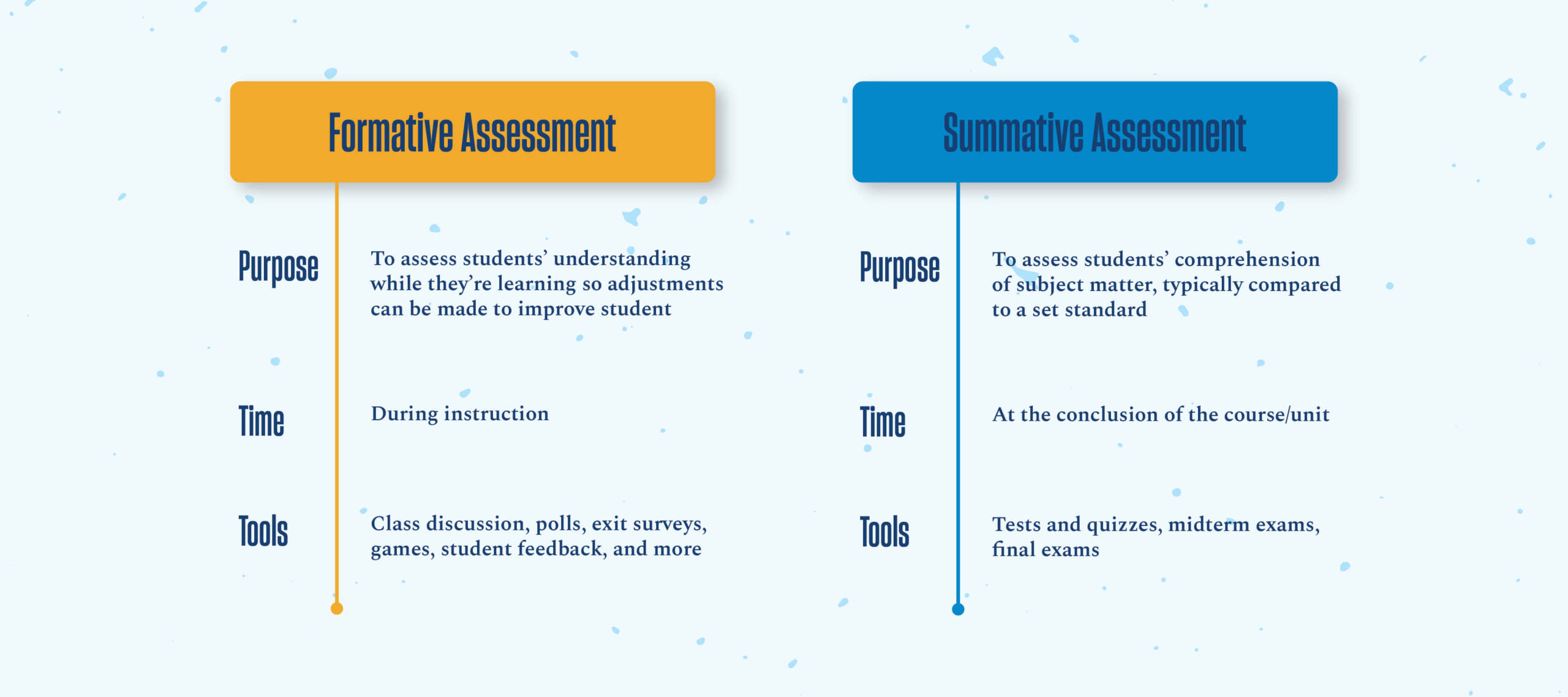
Today, we are covered by technology especially in all aspects of education, thus it also plays an important role in a revolutionary way to support assessment by making both formative and summative assessments more engaging, effective and responsible.

Technology encourages timely feedback which enables teachers to switch between different teaching techniques based on students’ actual requirements. This responsiveness can be beneficial in learning and recognizing potential deficiency areas in comparison to normal tests. However, particularly the adaptive learning interventions may customise the assessment activities in a manner, which is preferred as well as understood by the learner. https://www.igi-global.com/chapter/impact-technology-assessment-evaluation-higher/51460

Addressing Challenges and Concerns

Along with technology benefits there are some of the concerns too especially social and cultural considerations. The use of such formats of tests only serves to compound the social inequalities in education since the privation in this method is the internet and the technological literacy, which some learners can hardly get. This is a fair issue of concern in regards of the fairness of the assessment practices. Furthermore, the emphasis is placed on quantified results rather than discussions of learning with the emphasis on substantial ideas as it becomes the responsibility of the teachers that their students should consider assessments more than evaluations.

https://www.frontiersin.org/journals/education/articles/10.3389/feduc.2019.00116/full

Best Practices for Implementation

In my view, educators who likes to use technology in assessment should use several forms of assessments rather than only testing. It may include engaging in subject related content learning activities such as projects, discussions, portfolios, simulations and peer assessments rather than having only exams. Stressing on the role of feedback is critical because technologies can enable quick feedback giving to specific instructional and learning activities. Furthermore, to support the students centered learning, professional development to help educators use technology effectively in the assessment of students is important. Discussions about assessment helps students to appreciate and feel in charge of their experiences which mainly leads to relevant learning efforts throughout their studies.

My teaching philosophy

My teaching philosophy and classroom practice have been influenced by various learning theories over time. In the initial stages of my teaching career, I was significantly influenced by the behaviorism approach, which believes that knowledge is transmitted from the educator to the students through various instructional mediums. I found this approach particularly effective in the field of physical education, where students were provided with demonstrations and instructions to acquire specific skills. The idea was that they could master these skills through dedicated practice and repetition. Behaviorism is rooted in the theory of operant conditioning, as postulated by Skinner, which suggests that a specific skill can be acquired through repetitive practice and constructive feedback. As my teaching career progressed, I began to include constructivism theory and update my teaching techniques. This theoretical framework describes education as a dynamic process and highlights the idea that students gain knowledge by actively engaging with the subject matter, and the establishment of connections between their prior experiences and new knowledge. This strategy, in my opinion, represents a significant advancement in my teaching methods as I have observed that when learners assume an active role in their learning process, they are able to acquire information far more efficiently.

As a science teacher, I adopted constructivist principles in my teaching approach.I used techniques that enable the students develop their own theories, conduct assessments, and make conclusions instead of just depending on lectures.  For example, I organized a project with my chemistry students where they investigated the effects of pollutants on water quality. I  divided the students and guided them to develop research questions related to local water sources. They then designed experiments to test water samples, such as analyzing pH levels and the presence of pollutants. This project not only taught them about the chemical properties of pollutants but also encouraged collaboration and real data collection. It was a great example of how constructivism can enhance learning.

In my teaching experience, I have encountered the concept of connectivism, which recognizes the significance of digital networks in education. It emphasizes that education involves more than just traditional teaching methods; it is about learning through interaction within various networks. I incorporate a variety of digital tools in my teaching to give students new opportunities to connect to important sources of information and learn with their classmates on different platforms. These digital tools enable students to visually represent a range of ideas and insights, fostering creativity and interdisciplinary exploration. Integrating various online and social media platforms into their learning has enriched the students’ experience. Sharing resources and engaging with others has sparked creativity, leading to a positive transformation in their learning process. This environment helps them develop skills such as teamwork, communication, and group projects. Connectivism demonstrates how learning can be facilitated through networks and allow students to learn from each other’s experiences and perspectives.

Project-based learning is an educational approach that is centered around the lives of children. Projects often involve real-life issues related to their health and well-being, which helps to encourage teamwork and develop social skills. In this approach, the teacher’s role is to guide rather than direct. Children explore their interests, ask questions, and draw conclusions. As an early childhood educator in Canada, I had the opportunity to implement project-based learning, which enriched my teaching method. I helped my students develop their projects by focusing on their interests and experiences. For instance, while working on a project to study wildlife, a student was eager to learn about different animals and also wanted to incorporate a research process by creating group posters, conducting experiments, and sharing findings with teammates. This practical and child-centered approach is crucial in developing thinking skills and fostering creativity by connecting with the real world. Observing their growth through this process is a great way to make connections with the world. From my perspective, it’s crucial to promote independence and curiosity in young learners to establish a learning routine.


Caucasian girl kid playing and learning at playschool with female teacher. Mother and daughter at playroom around toys drawing with pencil colors

The Role of Productivity Suites

The Role of Productivity Suites in Shaping Tomorrow’s Workforce

Living in the world with technology, the education tools play an important role in developing critical skills. Productivity suites, such as Microsoft 365, Grammarly, Teams, Google Workspace, and some of their open-source counterparts like LibreOffice, One Note have moved beyond their initial role as task-based software into comprehensive platforms that shape digital literacy and workforce preparedness. All these productivity tools not only increase technical abilities among students but also foster creativity, time management, collaboration, and problem-solving skills needed to excel in a fast-evolving, tech-driven job market of the 21st century.

Mastering Digital Literacy

Digital literacy is not only the knowledge of using a computer or a specific device, but also the capacity to evaluate digital information and to use the tools and technologies at one’s disposal in numerous ways to solve a problem. Productivity suites are basic to this process as these suits are set of applications that students use every day which may include word processing, spreadsheets, presentations and cloud-based collaboration tools. However, these tools are used to perform tasks in the academic setting as the students get to enhance their previous, present and incoming document production abilities, management of information and the presentation abilities respectively. For example, while typing using word processing applications like Microsoft Word or Google Docs students learn the procedures of writing as well as font formatting, they also learn standard computer operations such as copying, pasting, creating links and embedding images and videos. These, of course, are not just academic skills, they are indispensable in the kind of workplaces that requires efficient and precise verbal and written communication and technical skills.

Microsoft Access, Microsoft Excel or Google Sheets are other examples of spreadsheets that go a step further and introduce students to the world of data management. They learn how information is organized, how to generate different charts, and how to perform formulas and make decisions.

As a result of this, they are building a framework of skills that are relevant in many different fields ranging from the financial sector to marketing where data is always important to decision making. The more students use most of these tools, the more they feel comfortable working in most digital spaces than worrying about the future development of the tools. Particularly, the digital literacy acquired in the course furthers the students’ application of the knowledge in practice that requires technological skills.

Building Essential Skills for the 21st Century

Today, in the modern technological era, productivity suites are a critical component in preparing employees of the future for the necessary 21st century competencies. Along with the basic functioning, these tools help to develop creativity, teamwork, problem-solving skills as well as flexibility i.e. valuable in the current global scenario. For instance, PowerPoint and Google Slides engage students in the creative process when designing presentations, in ways that are much more than just relay of information in an artistic form. The skill of presenting ideas creatively applies well in the working world as creative ideas can go a long way in an organization. Likewise, the cloud applications such as Google Workspace help students to work against the flow yet learn how to engage and what collaborative tools and platforms are suitable for handling various tasks and persons, thus preparing them for the number of organizations, which embrace the opportunities of massive remote cooperation.

Besides, productivity suites develop creativity, time management, collaboration as well as critical thinking, communication, and flexibility.

Like if the students start using spreadsheet systematically to analyse the data it may help them to take informed decisions which could play an important role in developing skills in the field of data science and other related fields. In addition, word processors and presentation software enhance student writing, presentation and organization skills as they work out how to effectively convey their thoughts determined by the mode to be used. Since these suites are dynamic, with features being added with time, the students are urged to be flexible, to be able to learn new technologies introduced in the tool. This ability to learn and adapt quickly to changes is paramount in the current world workplace where drastic changes are triggered by technology.

Preparing Students to Excel in the Workforce

Productivity suites are about more than classrooms as their uses are a pathway to the workplace. The attitudes students acquire when with these tools accurately conforms to the requirements of the immediate advancements in job market. The present and future workplace environment is fully connected through online channels to solve functional problems. By making students acquaint with these environments early enough, productivity suites assure them of the readiness for the workforce.

In the business world students, regardless of choosing finance, marketing or business, technology or even health care, productivity tools are used. From writing standard business reports and identifying business trends within organizations to presenting business performance reports on daily, monthly and quarterly basis, the students will discover that the skill learned while using the productivity suites are applicable in their future jobs.

In addition, the collaborative option of the productivity suites which makes the students ready for the workforce across the world. More people work remotely and use virtual teams, and the synchronous use of cloud-based tools will be an additional benefit as those students who have practised all of these tools in school will stand in a vantage point to help in those organizations that have adopted remote or hybrid work from home.

What’s Left Behind? Addressing the Gaps

As powerful as productivity suites are, they do come with their drawbacks. There is little chance to gain more experience in more complicated technical actions on the job. Softwares or applications such as Microsoft Office, Google Workspace and others are advanced productivity tools but the features are limited to basic to intermediary level work tools. They do not usually go deeper into core competencies such as coding or artificial intelligence, or other fields more pertinent to the digital economy which are now perceivably more applicable.

Moreover, although some of these tools encourage teamwork and innovative ideas, there are other types of business problems and analysis tasks that do not fit into these enumerated tools, or else they equip students with inadequate tools to face situations that need extensive technical knowledge or real experience with particular software types. For instance, the engineering, computer, and graphics students may likely need to learn the use of more professional applications like AutoCAD, Illustrator, MATLAB and Adobe etc which these productivity suites do not offer.

Accordingly, there is a need for the incorporation of supplementary assets and practices into the educating process to fill introduced gaps. However, effectively incorporation of technologies, such as coding platforms, tools for data visualizations, project-based learning helps students to master more complex technical skills. Further, developing opportunities for students to participate in internships, develop groups or teams that address real business situations, can help them acquire those interpersonal traits that are necessary for their success in their careers.


Productivity Suits tools offer an undeniably indispensable role in defining the future of learning and working. They equip the students with the online skills and skills in the twenty first century for better handling of the world challenges. Not only creativity, cooperation, critical thinking, and communication skills but also these tools prepare learners for future jobs. With industries transforming, education also must transform so that students are able to get more than basic computer skills they need required technological and social skills to succeed in a world that adapts in work settings. Implementing a balance between scalable and sustainable productivity solutions, necessary for creating more unique applications and enabling the acquisition of valuable real-life experiences, students will be more ready to confront a future day job.


The role of Productivity Suites in education

The Role of Productivity Suites in Shaping Tomorrow’s Workforce

Living in the world with technology, the education tools play an important role in developing critical skills. Productivity suites, such as Microsoft 365, Grammarly, Teams, Google Workspace, and some of their open-source counterparts like LibreOffice, One Note have moved beyond their initial role as task-based software into comprehensive platforms that shape digital literacy and workforce preparedness. All these productivity tools not only increase technical abilities among students but also foster creativity, time management, collaboration, and problem-solving skills needed to excel in a fast-evolving, tech-driven job market of the 21st century.

Mastering Digital Literacy

Digital literacy is not only the knowledge of using a computer or a specific device, but also the capacity to evaluate digital information and to use the tools and technologies at one’s disposal in numerous ways to solve a problem. Productivity suites are basic to this process as these suits are set of applications that students use every day which may include word processing, spreadsheets, presentations and cloud-based collaboration tools. However, these tools are used to perform tasks in the academic setting as the students get to enhance their previous, present and incoming document production abilities, management of information and the presentation abilities respectively. For example, while typing using word processing applications like Microsoft Word or Google Docs students learn the procedures of writing as well as font formatting, they also learn standard computer operations such as copying, pasting, creating links and embedding images and videos. These, of course, are not just academic skills, they are indispensable in the kind of workplaces that requires efficient and precise verbal and written communication and technical skills.


Microsoft Access, Microsoft Excel or Google Sheets are other examples of spreadsheets that go a step further and introduce students to the world of data management. They learn how information is organized, how to generate different charts, and how to perform formulas and make decisions.

As a result of this, they are building a framework of skills that are relevant in many different fields ranging from the financial sector to marketing where data is always important to decision making. The more students use most of these tools, the more they feel comfortable working in most digital spaces than worrying about the future development of the tools. Particularly, the digital literacy acquired in the course furthers the students’ application of the knowledge in practice that requires technological skills.

Building Essential Skills for the 21st Century

Today, in the modern technological era, productivity suites are a critical component in preparing employees of the future for the necessary 21st century competencies. Along with the basic functioning, these tools help to develop creativity, teamwork, problem-solving skills as well as flexibility i.e. valuable in the current global scenario. For instance, PowerPoint and Google Slides engage students in the creative process when designing presentations, in ways that are much more than just relay of information in an artistic form. The skill of presenting ideas creatively applies well in the working world as creative ideas can go a long way in an organization. Likewise, the cloud applications such as Google Workspace help students to work against the flow yet learn how to engage and what collaborative tools and platforms are suitable for handling various tasks and persons, thus preparing them for the number of organizations, which embrace the opportunities of massive remote cooperation.

Besides, productivity suites develop creativity, time management, collaboration as well as critical thinking, communication, and flexibility.

Like if the students start using spreadsheet systematically to analyse the data it may help them to take informed decisions which could play an important role in developing skills in the field of data science and other related fields. In addition, word processors and presentation software enhance student writing, presentation and organization skills as they work out how to effectively convey their thoughts determined by the mode to be used. Since these suites are dynamic, with features being added with time, the students are urged to be flexible, to be able to learn new technologies introduced in the tool. This ability to learn and adapt quickly to changes is paramount in the current world workplace where drastic changes are triggered by technology.

Preparing Students to Excel in the Workforce

Productivity suites are about more than classrooms as their uses are a pathway to the workplace. The attitudes students acquire when with these tools accurately conforms to the requirements of the immediate advancements in job market. The present and future workplace environment is fully connected through online channels to solve functional problems. By making students acquaint with these environments early enough, productivity suites assure them of the readiness for the workforce.

In the business world students, regardless of choosing finance, marketing or business, technology or even health care, productivity tools are used. From writing standard business reports and identifying business trends within organizations to presenting business performance reports on daily, monthly and quarterly basis, the students will discover that the skill learned while using the productivity suites are applicable in their future jobs.

In addition, the collaborative option of the productivity suites which makes the students ready for the workforce across the world. More people work remotely and use virtual teams, and the synchronous use of cloud-based tools will be an additional benefit as those students who have practised all of these tools in school will stand in a vantage point to help in those organizations that have adopted remote or hybrid work from home.

What’s Left Behind? Addressing the Gaps

As powerful as productivity suites are, they do come with their drawbacks. There is little chance to gain more experience in more complicated technical actions on the job. Softwares or applications such as Microsoft Office, Google Workspace and others are advanced productivity tools but the features are limited to basic to intermediate level work tools. They do not usually go deeper into core competencies such as coding or artificial intelligence, or other fields more pertinent to the digital economy which are now perceivably more applicable.

Moreover, although some of these tools encourage teamwork and innovative ideas, there are other types of business problems and analysis tasks that do not fit into these enumerated tools, or else they equip students with inadequate tools to face situations that need extensive technical knowledge or real experience with particular software types. For instance, the engineering, computer, and graphics students may likely need to learn the use of more professional applications like AutoCAD, Illustrator, MATLAB and Adobe etc which these productivity suites do not offer.

Accordingly, there is a need for the incorporation of supplementary assets and practices into the educating process to fill introduced gaps. However, effectively incorporation of technologies, such as coding platforms, tools for data visualizations, project-based learning helps students to master more complex technical skills. Further, developing opportunities for students to participate in internships, develop groups or teams that address real business situations, can help them acquire those interpersonal traits that are necessary for their success in their careers.

Productivity Suits tools offer an undeniably indispensable role in defining the future of learning and working. They equip the students with the online skills and skills in the twenty first century for better handling of the world challenges. Not only creativity, cooperation, critical thinking, and communication skills but also these tools prepare learners for future jobs. With industries transforming, education also must transform so that students are able to get more than basic computer skills they need required technological and social skills to succeed in a world that adapts in work settings. Implementing a balance between scalable and sustainable productivity solutions, necessary for creating more unique applications and enabling the acquisition of valuable real-life experiences, students will be more ready to confront a future day job.

I have read these articles

Digital Literacy in Education: Essential Skills for Students

Digital Literacy: Preparing Students for a Technological Future

A Comprehensive Guide to 21st Century Skills


My teaching philosophy and classroom practice

My teaching philosophy and classroom practice have been influenced by various learning theories over time. In the initial stages of my teaching career, I was significantly influenced by the behaviorism approach, which believes that knowledge is transmitted from the educator to the students through various instructional mediums. I found this approach particularly effective in the field of physical education, where students were provided with demonstrations and instructions to acquire specific skills. The idea was that they could master these skills through dedicated practice and repetition. Behaviorism is rooted in the theory of operant conditioning, as postulated by Skinner, which suggests that a specific skill can be acquired through repetitive practice and constructive feedback. As my teaching career progressed, I began to include constructivism theory and update my teaching techniques. This theoretical framework describes education as a dynamic process and highlights the idea that students gain knowledge by actively engaging with the subject matter, and the establishment of connections between their prior experiences and new knowledge. This strategy, in my opinion, represents a significant advancement in my teaching methods as I have observed that when learners assume an active role in their learning process, they are able to acquire information far more efficiently.

https://www.youtube.com/watch?app=desktop&v=OLpsVp7d34c

As a science teacher, I adopted constructivist principles in my teaching approach.I used techniques that enable the students develop their own theories, conduct assessments, and make conclusions instead of just depending on lectures.  For example, I organized a project with my chemistry students where they investigated the effects of pollutants on water quality. I  divided the students and guided them to develop research questions related to local water sources. They then designed experiments to test water samples, such as analyzing pH levels and the presence of pollutants. This project not only taught them about the chemical properties of pollutants but also encouraged collaboration and real data collection. It was a great example of how constructivism can enhance learning.

In my teaching experience, I have encountered the concept of connectivism, which recognizes the significance of digital networks in education. It emphasizes that education involves more than just traditional teaching methods; it is about learning through interaction within various networks. I incorporate a variety of digital tools in my teaching to give students new opportunities to connect to important sources of https://ie.pinterest.com/pin/319192692321738325/  information and learn with their classmates on different platforms. These digital tools enable students to visually represent a range of ideas and insights, fostering creativity and interdisciplinary exploration. Integrating various online and social media platforms into their learning has enriched the students’ experience. Sharing resources and engaging with others has sparked creativity, leading to a positive transformation in their learning process. This environment helps them develop skills such as teamwork, communication, and group projects. Connectivism demonstrates how learning can be facilitated through networks and allow students to learn from each other’s experiences and perspectives.

Project-based learning is an educational approach that is centered around the lives of children. Projects often involve real-life issues related to their health and well-being, which helps to encourage teamwork and develop social skills. In this approach, the teacher’s role is to guide rather than direct. Children explore their interests, ask questions, and draw conclusions. As an early childhood educator in Canada, I had the opportunity to implement project-based learning, which enriched my teaching method. I helped my students develop their projects by focusing on their interests and experiences. For instance, while working on a project to study wildlife, a student was eager to learn about different animals and also wanted to incorporate a research process by creating group posters, conducting experiments, and sharing findings with teammates. This practical and child-centered approach is crucial in developing thinking skills and fostering creativity by connecting with the real world. Observing their growth through this process is a great way to make connections with the world. From my perspective, it’s crucial to promote independence and curiosity in young learners to establish a learning routine.

During my teaching experience, my traditional teacher-centric approach has evolved into a holistic and student-centric learning experience focused on skills. By the integration of instructional technology and the utilization of diverse digital tools, I have aimed to enhance student participation and foster their creativity.

For this blog i have read-

Chapter 2: The nature of knowledge and the implications for teaching

Debunking bad learning theories

https://www.edutopia.org/article/bringing-project-based-learning-preschool/

Blog post 1

Educational technology, commonly referred to as EdTech, is a multidisciplinary field that involves the integrated use of computer hardware, software, and educational theory to facilitate and enhance the learning process.https://en.wikipedia.org/wiki/Educational_technology.

It includes the creation of technologically dependent resources including digital learning platforms, virtual reality tools, and educational applications, as well as the scientific study of technology’s effects on education.Educators may construct dynamic learning environments that meet the requirements of a wide range of students with the help of these tools. The goals of education technology are to enhance pupil involvement, and develop their abilities for analytical thinking and problem-solving.

I I’ve read the chapter A short history of educational technology  that explains how very basic instruments like radios and chalk boards were a methods of traditional teaching approaches. However, there have been many changes in it and the most recent of these changes came about as a result of historical evolution, today it has become a highly technological digital platform that is more interactive and student-centered than it was in the past. Through my teaching experience, I have observed that modern digital platforms in education have played a significant role in fostering students’ critical thinking abilities.interior of a traditional style school classroom. interior of a traditional style school classroom. 3d render Classroom Stock Photo

https://www.istockphoto.com/photo/interior-of-a-traditional-style-school-classroom-gm1387660986-445537280?utm_campaign=srp_photos_limitedresults&utm_content=https%3A%2F%2Fwww.pexels.com%2Fsearch%2Ftraditional%2520classroms%2520setting%2F&utm_medium=affiliate&utm_source=pexels&utm_term=traditional+classroms+setting

In the past, prior to the development of contemporary communication technology, radio and television were the main means of enabling one-way communication.Books and printed materials were foundational in the distribution of information. However, in contemporary educational environments, the integration of diverse high-tech tools, such as interactive whiteboards, educational apps, have contributed to a significant increase in active engagement among children. This shift has allowed for more dynamic and interactive learning experiences within the educational setting. In the constructivist approach to education philosophy, students gain knowledge via actively participating in innovative and investigation-based learning activities. Similarly, students in the connectivism approach use digital tools and a broad digital network to learn from one another’s experiences.


This chapter highlights the impact of digital platforms on enhancing the flexibility of education. During my teaching career in India, I have seen many children residing in remote areas encounter challenges in accessing coaching for competition preparation. However, the utilization of digital platforms and the internet enables them to engage in distance learning, thereby eliminating their educational barriers. The development of https://www.istockphoto.com/photo/building-robotic-car-for-school-assignment-gm1084488926-290987320?utm_campaign=srp_photos_limitedresults&utm_content=https%3A%2F%2Fwww.pexels.com%2Fsearch%2Fmodren%2520classrooms%2520with%2520digital%2520tools%2F&utm_medium=affiliate&utm_source=pexels&utm_term=modren%20classrooms%20with%20digital%20tools

educational technology has been consciously and unconsciously influenced by the historical progression of diverse technical tools.

In the article The 10 worst edtech debacles of the decade the author talked about a number of ed-tech challenges that have emerged during the past decade.The adoption of educational technology has resulted in a considerable disparity between affluent and underprivileged backgrounds, leading to unequal access to technology. This has made it more challenging for children in schools with insufficient resources to make effective use of instructional technologies.Some online learning platforms, such as Massive Open Online Courses and AI Learning Systems, have failed to provide authentic information to students. Similarly, many education technology companies are not taking responsibility for safely collecting students’ personal information data, thereby putting their personal information and safety at risk.

Despite the advancements in technology, the article emphasizes the irreplaceable role of teachers in education. While technology has its place, the specific and effective teaching strategies employed by educators cannot be replicated by any form of technical tools. This article critically examines the historical progression of educational technology over recent decades and advocates for the adoption of an ethical framework in the integration of technology within educational contexts. It emphasizes the significance of preserving the pivotal role of teachers and human interaction alongside technological systems in the educational domain.