A Journey Through EC&I 833 by Aatif and Gagan deep kaur

Our Reflection

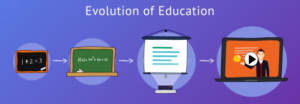
Our journey about Educational Technology EC&I 833 have been a transformative experience from enhancing our understanding about EDTech to exploring new approaches of integrating digital tools in the classroom. We understand how Educational Technology has evolved from chalkboards to AI and coding and how this advancement has prioritized societal needs. As Tony Bates said Technology has reached rural areas where schools can’t reach. However, we would agree with the Neil Postman perspective about how technology comes with trade offs like Google workplace encourages collaboration but it raises a crucial concern about equity and privacy. Additionally, we discussed the important learning theories like behaviorism, collaboration and constructivism that guides us to integrate various tools like Kahoot, google docs  to foster active learning and engagement among students. Through this course, evolution from Web 1.0 to Web 3.0 was an impact topic to realize the drastic transition and experiencing AI driven learning. This transition has inspired us to think critically about how we can integrate useful tools to experience personalized learning in our classroom while considering diverse needs of our students. The topic Assistive technologies have highlighted the concept of inclusivity and how we can take care of diverse needs in our classroom. We invite you all to watch our summary of Learning video as it reflects our journey of personal experiences, insights and vision about Educational Technology. 


New ways of Learning through Generative AI


Nowadays, Generative AI has integrated into our lives in such a way that we can’t even think of living without technology for a second. My journey of teaching has been reshaped through generative AI. As a teacher, I have witnessed how AI has the potential to transform the educational experience and provide a better learning environment especially for those who belong to remote areas. 

Impact of AI on my Teaching Journey 

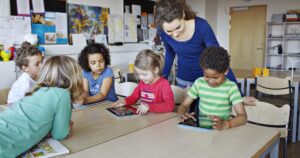
Drawing from my experiences, As a teacher, the major challenge was adapting your pedagogy according to the diverse learning styles of students due to limited resources. However, Generative AI has been the game changer in providing a personalized learning environment in the classroom. With the support of AI tools like chatGPT, canva, Khan academy or Kahoot I have provided my students an interactive classroom environment where they can explore unique ways of teaching and learning. They can learn through games on Quizzes app or they can have customized practice problems or visual explanations to the content. Generative AI has played a crucial role for students in rural areas, where the access to the resources or quality education is often limited. AI tools have given opportunities to students to explore topics like coding or STEM and the future of coding in the ed-tech industry has drastically risen in the world. While working as an Educator, I  have integrated Cognitive Coaching techniques in my teaching style to understand my students’ emotional and social needs.  Generative AI tools  have supported me in achieving this success for my students. 

Role of Generative AI in My Personal Life

Beyond teaching, Generative AI has been beneficial in my personal life. From cooking my favorite dishes to organizing my day, AI has been very supportive in making my everyday activities effective. Various AI Apps like Fitbit have been very helpful in tracking my health progress and are a major part in achieving wellness goals. AI boosts our personal lives by saving precious time, promoting fitness and fosters creativity. However, every coin has two sides, Thus leveraging Generative AI fully is a huge challenge. There are certain reasons like sometimes uneven internet connectivity, lack of digital tools or limited professional teachers which comes as hurdles in a path to be successful. However, I believe AI has the power to bridge the gaps of urban rural educational division or provide equal opportunities of quality education to underprivileged students.

The Future of AI in Education

I believe the future of Generative AI is to revolutionize the education system by making it more accessible and engaging. Even the students from remote areas would have equal access to learn using AI tools. AI should be considered as a tool for creating opportunities for excellent growth and better learning.AI would be beneficial not only for students but for teachers also in reducing their administrative work so that their focus should only be on fostering creativity and better learning environment in the classrooms. Through Generative AI, I aim to encourage my students to achieve goals, think big and embrace change for their future. 


https://www.ibm.com/topics/artificial-intelligence

Advantages and disadvantages of AI in education

https://www.learning3d.com/post/making-learning-work-for-every-learner-how-does-the-two-sigma-problem-help-us


Makerspaces matter : A gateway to 21 century skills 

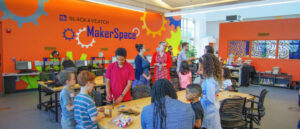
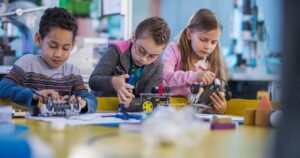
Makerspaces or coding have transformed our entire education system into innovative space, whereas preparing our students to be lifelong learners and problem solvers by emphasizing on creativity, collaboration, and innovation. They have given students a platform to explore STEAM concepts (science, technology, engineering, art, and math) through various hands-on activities. Going through this week’s readings have given me unique insights about how makerspaces or coding can have a meaningful and lasting impact on students.  

When I was working as an Educator I introduced Makerspace/coding through different project-based activities like simple available materials so that students can actively participate in their learning journey and apply their knowledge to the real world settings. In my science classroom, I allotted students to create models or projects in order to showcase the scientific concepts such as ecosystem projects or circuits. I believe these activities have built up abstract thinking and fosters critical thinking, problem solving skills and the collaboration skills. Moreover, beyond the theoretical knowledge the makerspace/coding teach them how to be resilient and prepare them for the real world challenges they will face in life. 

Considering whether all the students get benefit or not from the makerspace/coding, I would say, it benefits most of the students. As, some students might face barriers because of various factors like lack of confidence or their interest and inequitable access to the resources. During my teaching practice in the rural region of India, I noticed that students who belong to the underprivileged backgrounds were often lacking in the confidence to experiment freely or they have limited access to useful resources. They were more comfortable in structured, teacher-led instruction and found makerspace or coding involved learning pedagogy more intimidating. But later I have observed that the students who were hesitant before were developing confidence and involved actively in the classroom because of the positive motivation and a supportive environment. Thus, this emphasizes on the importance of inclusivity and differentiated support in makerspaces to ensure all students benefit.

In my experience, I have discovered that a makerspace does not really depend on advanced technology or some expensive resources to be effective in the classroom. It requires simple materials like cardboard or charts to give students hands-on exposure to foster creativity, curiosity and active engagement. I remember when I gave my students a project to prepare solar ovens where they used cardboard, aluminium foil and plastic wrap to construct this model. This activity not only taught them about the scientific concept behind the solar oven but also encouraged them to enhance their collaboration and critical thinking skills. 

I am not in favor of this thought that only “techies” can teach makerspaces. Any Educator can teach and integrate makerspace in their teaching practice. I have collaborated with various teachers who were having very little knowledge about the technology or makerspace initially but they were willing to learn and adapt this hands-on approach into their pedagogy to give students a space where they can grow and build 21 century skills over time. 


References :

https://www.trceducation.com/stem-robotics-coding-and-maker-spaces

https://www.raspberrypi.org/app/uploads/2021/11/Teaching-programming-in-schools-pedagogy-review-Raspberry-Pi-Foundation.pdf

My Journey of Making Learning Accessible


My journey as an Educator began in India where my experiences shaped from the large classrooms with very limited resources to integrating technology in education to fulfil the diverse needs of the students. As a teacher, every stage in my life comes as a learning lesson. As I reflect on my teaching journey, it reminds me of all the useful strategies I used to make learning accessible for my students. There were plenty of challenges in my teaching journey  like large class size, diverse learning abilities. But with each challenge I get an opportunity to do something unique for my students in order to connect with them in meaningful ways. 

I have used multiple tools from time to time to make learning accessible for my students and it really transformed what I teach and learn by breaking down all the barriers like students with disabilities, connecting learners across the globe, or providing flexible ways to engage with content. Tools like zoom or google classroom were really helpful for my students to learn virtually during pandemic. Additionally, as I was moving forward in my career I understood how important differentiated instruction learning is. Not all students learn the same way so I adapted colourful charts and diagrams for visual learners and integrated tools like YouTube to show them videos of the concept to grasp easily. This approach not only made learning more relatable but also helped my students to understand the concepts easily. Also, by inculcating tools like Quizzes or Kahoot fun in the classroom, the excitement is unmatched. 

Today’s presentation by Kateryna, Aysha and Kevin has given me valuable insights about useful assistive technologies we can integrate in our teaching practice. I have learned about how these tools would  support students with disabilities and  also modify the learning experience for all by creating a more supportive and inclusive environment. I am excited to explore all these technologies further to make learning more accessible, engaging, and equitable for everyone.

What were your challenges in your teaching journey before and after technology? 

Let’s share and learn from each other !


Assessment As Connection : Prioritizing Conversation over Data

Assessment should be considered as an interactive and more individualised process rather than a sheet consisting of scores. I am completely aligned with Joe Bower’s statement on a unique perspective about assessment. By having a constructive thought about assessment, we analyse why technology is constraining assessment practices and how we can reform our approach to focus on holistic understanding of students rather than delivering only the quantifiable data. Educational goals should incorporate useful assessment technologies to foster student learning and growth. According to me, Incorporating “ good” assessment practices actually means integrating useful technology which promotes constructive feedback and builds good conversation rather than just recording data. 


To make assessment an ongoing and supportive process, we should encourage teachers to promote formative assessment over summative assessment. The tools like Google classroom foster continuous feedback and reflection on progress rather than focus solely on final result. I believe this approach will concentrate on the learning as a journey and hence will value the process and students’ efforts. Secondly, we can adopt specific technologies in the teaching practice that promote  assessment through different modes of expression. Padlet is the tool that empower teachers to share their observations in the form of video responses or audio as per different communication styles of students. Moreover, the digital tools should include collaborative features that enable students to work together on various projects. This will not only promote collective learning but also encourage students to improve their social and cultural awareness by knowing different perspectives. Lastly, I believe that we should provide proper training to teachers on how to integrate assessment technology in education effectively. Educators must learn to take control over assessment design and incorporate digital tools to meet the diverse needs of students.

REFERENCES :

https://gem-report-2023.unesco.org/technology-in-education/

https://www.testreach.com/blog-post/ten-informative-facts-online-assessment-tools.html

Beyond the Classroom : Rise of Education 3.0

Today’s presentation has given me a new perspective about Education 3.0. The transformation of Education from 1.0 to 3.0 sheds light on the learner-driven concept where students are allowed to set their own learning objectives and become self-determined. Jackie Gerstein has compared the evolution of the Web from 1.0 to 3.0 with the drastic revolution of education from 1.0 to 3.0. This metaphor captures the whole new version of education- 3.0 which emphasised on various skills like critical thinking, creativity, 21 century skills and highly personalised and child centered learning environment. If we think about what an Education 3.0 classroom looks like, imagine a room in which students might have the full right to choose and pursue self-directed learning path. This approach not only emphasises critical thinking and creativity but also help the educators to meet the diverse needs of the students in the real world. 

The radical shift of the Web from 1.0 to 3.0 in education have both positive and difficult implications. This shift have not only focused on personalized learning through various flexible learning platforms that involve AI but also making sure that the course material is relevant and easily accessible to meet the diverse needs of individuals. Thus, I believe this drastic change have brought easy access to open and global knowledge, allowing students from different environments to connect with diverse resources and communities.

However, I think there are some disparities such as those students who have easy access to latest technologies and digital literacy will thrive, while those who lack these resources, they may have to face various limitations in educational engagement and access to comprehension . For example, especially rural and underserved communities, may suffer shortcomings in a 3.0 educational setting without sufficient digital infrastructure and skills training.

The teachers who will be privileged by this change are those who are technology freaks and proficient in using digital tools. Just like me, I love using advanced digital tools to design and manage my work and make my learning better.  We can enhance the educational experience by integrating technology, also fostering more engaging and creative learning environments for our kids. The students who will get disadvantage from the advancement of Education 3.0 are those who belong to marginalised groups as they have limited access to the technology yet the educators are advocating for the policies and infrastructure that promotes inclusivity and educational equity in the education 3.0 model and benefits everyone equally. 

References :


Adapting digital tools to our teaching styles


Online and blended learning have become a crucial part of the education system after the outbreak of the covid pandemic. There are numerous tools that are adopted by educators at different levels to enhance the teaching and learning outcomes and these tools are not only becoming a part of our lives but now also cater to the unique difficulties of accessibility, engagement, the curriculum planning and delivery in a diverse educational settings. During my teaching practice, I was familiar with multiple tools like zoom, Microsoft teams, Kahoot, Moodle and google classroom that highly encourage interactive and collaborative learning in my classroom. Many digital tools have offered personalised instructions based on the individual’s learning styles that really helped my students to grasp the content more thoroughly and avoided the one-size fits all strategy.

In the case of the teachers, these tools are not only effective but also creative, and responsive to fulfil the diverse needs of the students, while these tools also focus on the teacher’s professional development. For instance, Google classrooms have a package of advantages that helps in managing all the administrative work that teachers have to do such as providing grades, tracking student progress, communication with parents or assigning homework. 


I have experience of both offline and online teaching practice. While I was teaching in person, it was quite a difficult task for us to incorporate useful digital tools into the teaching pedagogies due to various factors like time constraints and a lack of adequate resources by the organisation in the classroom. However, when the pandemic hit really hard, the education system drastically shifted to online settings, and digital learning became a prominent part of the educational system. This transition significantly enhanced not only my teaching and learning experience but also my students’ learning experience too. 

Using platforms like Moodle and google classroom have been very valuable and transformed  my teaching practice as they allowed me to organise my course content, all students assignments, provide real-time feedback and provide them grades efficiently. Additionally, integrating tools such as Zoom particularly for the live sessions and Google Docs for collective learning projects has fostered greater engagement, team work and interaction among my students. This shift have made learning more accessible and have shown me the importance of being adaptable to digital tools to enhance educational practices and encouraged me to explore innovative teaching method

References:

 Online and Distance Learning: Concepts, Methodologies, Tools, and Applications: Concepts, Methodologies, Tools, and Applications.


“Amalgamation of Productivity suites into Educational settings”

How have productivity suites been integrated into educational settings at different levels (K-12, higher education, etc.)? Reflect on their accessibility for students, teachers, and institutions. How do these tools address or exacerbate issues related to digital divide and equity?



Productivity suites, such as Microsoft Office 365, Google Workspace, and Apple’s iWork, have been integrated in the educational settings to enhance the better learning experiences among the students. Their amalgamation varies across K-12 and higher education and results in enriched collective learning among students and better administrative efficiency. At the K-12 level, productivity suites have been merged into both classroom settings and administrative work in order to support teachers, learners, and school management.

In K-12 Educational settings, 

Integration of Productivity suites in Educational settings :
Collaborative Learning: Productivity suites are often used to foster collective learning among students. The K-12 Students use tools like Google Docs or Microsoft Word for writing, formatting or editing different assignments, projects, and essays simultaneously regardless of physical location. Teachers can also provide real-time feedback or track progress using comments or chat boxes without waiting for the assignment to end.

Administrative Use: Teachers use productivity tools for curriculum planning, marking grades, and communication with parents and students. For example, Google Classroom is a versatile platform that enhances appropriate organisation, communication, and collaboration while promoting a more interactive and accessible learning experience for  students. 

Student Engagement: Platforms like Microsoft OneNote or Google Keep allow students to take digital notes, see course materials, this helps them to stay organised and up to date in the classroom and access to various resources . These tools encourage self-paced learning and personalized content management.

Accessibility for students, teachers and institutions 

  • For Students: In K-12 settings, especially in schools with limited resources, ensuring that all students have access to the necessary technology and productivity software can be a challenge. However, initiatives like Google’s free suite for education and discounted Microsoft Office 365 accounts help bridge the gap. Some schools implement device lending programs or use Chromebooks to ensure students have access to productivity software.
  • For Teachers: Professional development is crucial to ensure that teachers are comfortable using these tools. Many districts offer workshops and training to ensure teachers can effectively integrate these tools into their classrooms.
  • For Institutions: Schools may face budget constraints when implementing comprehensive productivity suites. However, cloud-based services have made it easier for institutions to adopt and scale these tools, often offering them for free or at a reduced cost.

Addressing the issues like Digital Divide and Equity

The widespread adoption of productivity suites in education highlights issues related to the digital divide, particularly around access to reliable devices and internet connectivity.

  • Access to Devices: Many educational institutions provide students with laptops, tablets, or Chromebooks to ensure that they can access productivity suites and other digital tools. However, this is not always feasible in underfunded districts, creating gaps in access.
  • Internet Access: Students in rural or economically disadvantaged areas often face challenges in accessing reliable high-speed internet, limiting their ability to participate in online learning or collaborate effectively using cloud-based tools.
  • Teacher Training: Teachers and faculty need continuous training to use productivity suites effectively in their instruction. Institutions with fewer resources may struggle to offer comprehensive professional development, widening the gap in the effective use of these tools.

In conclusion, The integration of productivity suites in education has revolutionized teaching, learning, and administration, making them essential tools at every level, from K-12 to higher education. These tools foster collaboration, digital literacy, and flexibility in learning, but challenges related to digital equity and the digital divide persist.


Reflection on my Teaching Philosophy

    MY TEACHING PHILOSOPHY 

My teaching philosophy has been reshaped over time by numerous experiences as a teacher, diverse theories of knowledge and learning. There are multiple theories and philosophies that support my teaching practice, and they have played a significant role in helping me become a better teacher. These frameworks have led the way to my growth and I have shifted my objective from a more conventional, subject-based teaching approach to a more holistic, student-centered approach, where I see learning as a dynamic, interactive, and reflective process. The merging of technology, cognitive coaching methods, and social-emotional learning has enriched my teaching philosophy, enabling me to focus not just on academic success but also on the personal growth and well-being of my students.
Reflecting on my teaching journey, the constructivist theory by Piaget has really helped me create an environment for the learners to explore, question, and build their understanding. I see myself as a facilitator who provides opportunities to students to engage and participate in exploration, problem-solving, and critical thinking rather than simply giving lectures. Here I would like to share my experience when I adopted constructivist approach by replacing traditional lecture method, When I was teaching class 8, a lesson on water cycle, like instead of simply drawing the cycle on the board and asking them to learn instead, I guided them through an experiment to simulate evaporation and condensation. After That, giving them a chance to create their own models of water cycle. This hands-on method allows them to construct their own understanding of the topic, leading to deeper engagement and long retention. This constructivist approach broke away from traditional methods and empowered students to actively participate in their own learning process.


As an early childhood educator working in Canada, I see the significant importance of social-emotional learning, particularly through Maslow’s hierarchy of needs. At the start of the day in daycare, I have learned the value of “reflection circles”, where all the students can express how they are feeling. This practice encourages students to share their emotions and allows me to check in on their emotional well-being, especially in classrooms with high-stakes pressure. 


Key references:

https://youtu.be/k_oYU2YKMe4?si=RNWmhYYxPFc09fCD

https://opentextbc.ca/teachinginadigitalage/part/chapter-2-the-nature-of-knowledge-and-the-implications-for-teaching/