Influences of Web 2.0 and its impacts on schools and society

This week’s presentation gave fundamental and impactful insights to Web 1.0 and Web 2.0. I personally have never heard either term before this class, but I was able to connect to the contents of both and brought it to the context of today.  The examples from the presentation brought back memories, such as; the dial up internet, the browsers that were used then (internet explorer), to its transition into the social web (google) that I am interacting with today. The documentary on Netflix entitled The Social Dilemma was recommendation to us, which involves several technological engineers that were once employed to major social media companies, sharing their insights and concerns about the impact these social tools have on humanity at large.

Tristan Harris, the former Design Ethicist at Google and now the a co-founder of Center For Humane Technology is an advocate of aiding tech industry in ethically shaping their humane and spiritually potential. One can appreciate Web 2.0 vs Web 1.0 for its interactivity and collaboration such as Wikipedia and social network sites. It also enhances communication, facilitates knowledge sharing and learning and enables marketing and business opportunities.

The irony however is, these benefits of Web 2.0, when misused as we are experiencing now, breeds all the limitations and catastrophic impacts it is having on society and education presently.

Tristant asked the question, if all of what we are engaging in online is free to us, but these giant tech companies are generating billions, whats the product? The answer blew my mind. The product is our attention. These tools are designed to persuade us by gradually changing what we do, how we think and in general who we are. In my home country, us as educators felt so hopeless as we observed how rapidly the students interest in academics declined and the trend was to become an influencer. There were actual influencers flaunting money and imprinting the idea of school being a waste of time. The life of luxury is being sold to our children that usually involves unethical, sometimes illegal practices, along with the trend of designer bodies. Morals are slowly becoming a thing of the past, while our young ladies mental health issues sky rocket due to the illusion of the bodies they see on social media that they compare themselves to. These are the Gen z who will be leading us 15 years from now and its a scary thought.


Posted in Uncategorized

The Dilemma of social web

The Social Dilemma is a documentary that discusses the psychology of social media and the harmful effects that it is already showing in new generations. The film features interviews with many social media development pioneers, who have left their positions to discuss some of the frightening aspects of these platforms that the public knows little about. This documentary is thought-provoking, and it made me analyze the role that social media and technology play in my day-to-day life.


(Image: Netflix)

Technology and social media are examined in greater detail in this documentary. It’s a really strong and timely movie. It gave me a lot to think about. I was left with things that I never imagined were occurring to me and all of us. I did additional research on this movie after reading this week’s blog post, and I came across a website that demonstrates a number of its features. There are so many quotes that influenced me after watching this and some of them are as follows……………..…

“If you’re not paying for the product, then you are the product.”

“There are only two industries that call their customers “users”: illegal drugs and software.”

“Typing…. It is not to save your time but to keep you engaged for longer.”

Positive Influences of Web 2.0

Enhanced Connectivity: Web 2.0 has made it easier for people to connect globally. Platforms like Facebook, Twitter, and Instagram allow us to maintain relationships, share experiences, and build communities that transcend geographical boundaries. This connectivity has facilitated social movements and collective action, making organizing for causes such as climate change, social justice, and political engagement easier.

Photo of people doing handshakes
Photo by fauxels on Pexels

Access to Information and Education: The social web has democratized access to information. Educational content is more accessible than ever through platforms like YouTube, Khan Academy, and various online courses. These resources provide opportunities for lifelong learning and can supplement traditional education.

Support Networks: Online communities offer support for people with shared experiences or challenges. From parenting groups to mental health support forums, the social web provides a space for individuals to seek advice, share stories, and find solace in knowing they are not alone.

Negative Influences of Web 2.0

Mental Health Issues: “The Social Dilemma” highlights the psychological impact of social media, particularly among adolescents. The constant quest for likes and validation can lead to anxiety, depression, and low self-esteem. The phenomenon of “Snapchat dysmorphia,” where individuals seek cosmetic surgery to look like their filtered selfies, underscores these concerns.

Addiction and Manipulation: Social media platforms are designed to maximize user engagement through algorithms that create addictive feedback loops. These algorithms can manipulate user behavior by promoting content that reinforces existing biases, creating echo chambers and increasing polarization.

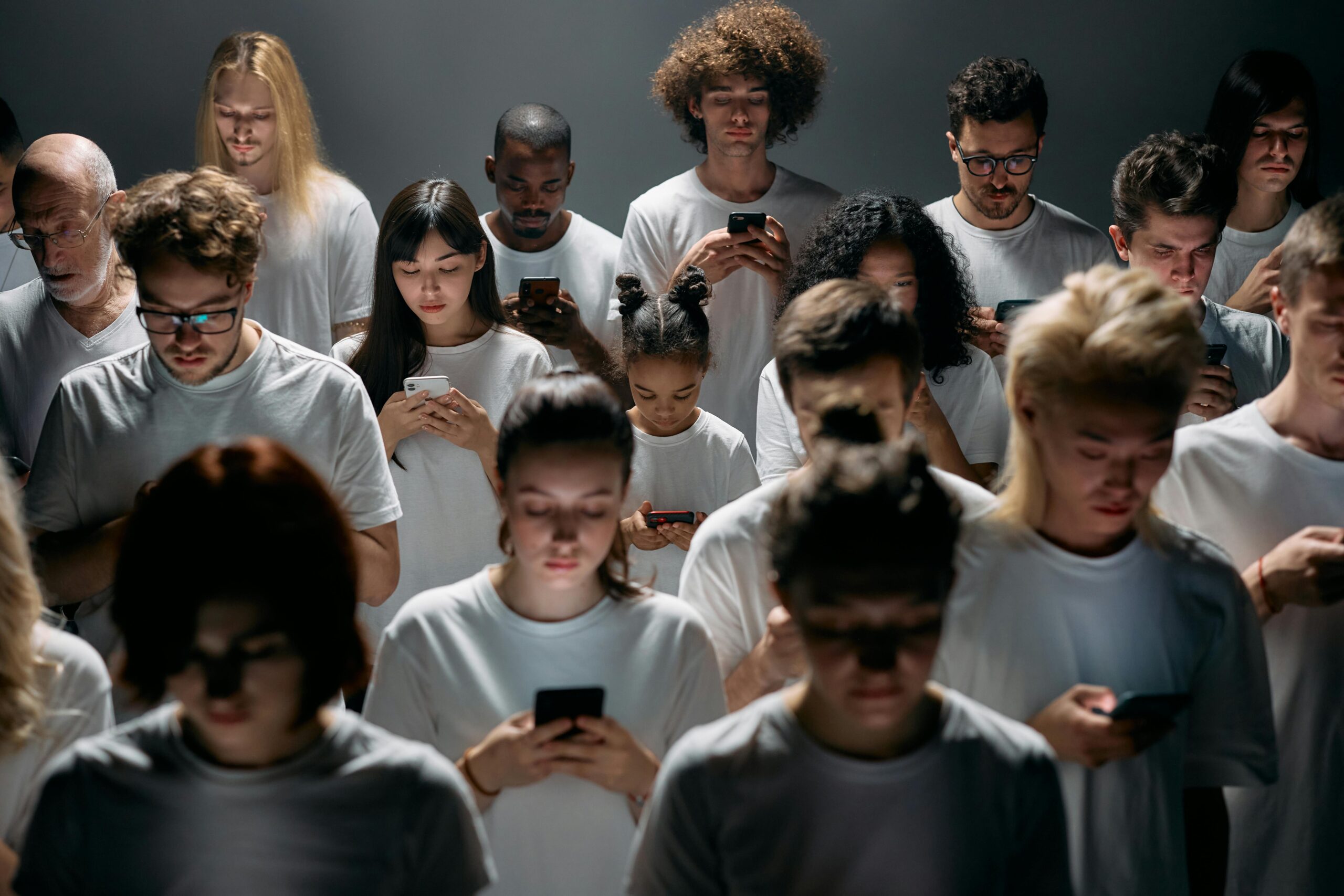
Photo of people engaged on their phones
Photo by Cottonbro Studio on Pexels

Privacy Concerns: The extensive data collection practices of social media companies raise significant privacy issues. User data is often harvested and used for targeted advertising, political manipulation, and other purposes without explicit consent, leading to concerns about surveillance and data security.

Implications for Schools and Society

Educational Impact: The addictive nature of social media can distract students and affect their academic performance. Schools need to address these challenges by incorporating digital literacy into their curricula, teaching students to critically evaluate online content and use technology responsibly.

Social Skills Development: The prevalence of digital interactions can impede the development of face-to-face social skills. Educators and parents should encourage balanced tech use and foster environments where children can develop essential interpersonal skills.

Policy and Regulation: The film calls for greater regulation of social media platforms to protect users’ mental health and privacy. This includes implementing policies around data protection, transparency in algorithm use, and measures to counteract misinformation and online harassment.

“The Social Dilemma” serves as a crucial reminder to critically evaluate our relationship with social media and its broader societal impacts. By understanding the dual nature of Web 2.0, we can work towards creating a more ethical and supportive digital environment that enhances connectivity and learning while mitigating its negative effects on mental health and privacy.

Integrating Technology with teaching

Teaching has always been my passion. To meet the diverse needs of my students and make my teaching more engaging, I am motivated to incorporate various useful tools into my teaching pedagogy. I believe, with digital tools the online and blended learning experience becomes more dynamic and equitable and makes sure that every student should get an equal opportunity to succeed in their life. All these tools have become the lifelines in our education system. 

The first tool I would prefer in my online and blended teaching is Zoom or Microsoft teams because of the multiple features like live sessions, Breakout rooms for small interactions, Recording capability etc. These features not only allow real time collaboration but also creates an inclusive, engaging and flexible learning environment. Another tool which I would prefer is Kahoot as this tool successfully keeps all the students engaged in the online setting, which is quite a difficult task for the teachers nowadays to manage their students engaged during online classes. The special features like collaborative boards and quizzes foster learning that is more interactive and fun. The third digital tool which I would select as an Educator is Google classroom as it allows the teachers to organize the course content, assignments and easy communication with the parents. This tool supports adaptable learning and helps the students to access all the resources at their own pace. 

If I would have to shift from my in-person teaching practice to an online educational format, I think this experience will be a blend of both opportunities and the challenges. In my perspective, digital tools like zoom, google classroom or the other learning platforms, have a great potential to create an engaging and accessible learning environment, But it would involve more deliberate efforts to adapt to this setting and to meet the students’ needs effectively. With the trend of online education, the new pathways are open supporting the needs of diverse students and making the learning more impactful. 

During COVID, When I was working under the “Education for all” program at BYJU’s I witnessed firsthand how these digital platforms are bridging the gap of digital divide by making education more accessible to the children especially who belong to the underserved communities. The recorded or live video based lessons provided by BYJU’s help the students to captivate with the educational content despite their physical location.

Posted in Uncategorized

Distance and Online Learning; Tools For the Right Time and Place

Photo by Christina Morillo on Pexels.com

As many of us in this class know, COVID accelerated the rate at which many of us integrated online teaching into our careers. There was a mad scramble to create an efficient, EFFECTIVE way to help our students continue to receive an education during a very uncertain period of our lives. There were mistakes made; trial and error, and plenty of frustration for teachers, parents and students. This class helps us to reflect back on the technologies that worked well, and maybe the odd one that frustrated us.

I was a little luckier than some, since in the year previous to the pandemic, I had been given the opportunity to attend PD on technology for educational use. I spent time at a Google Summit in Saskatoon that introduced me to Google Classroom. After that week, I was convinced that this was the way to make education more accessible, and I worked for weeks to set up my online classrooms. They were always evolving, and still are. I have continued to use them in the right situations and I found it depended on the group of students that I would be teaching.

I also added other technologies to my classroom. Kahoot was an app that I tried and I occasionally used it over the years. This year, however, there has been less of an opportunity with the new cell phone policy in place in Saskatchewan. We can use some of these technologies with Chrome books, however, not every classroom has access to that technology either. This is one disadvantage some schools have when it comes to online use of technology.

In my experience there are some limitations to the use of online learning, other than the fact that parts of the province where Wi-Fi is limited. The fact is that many students do not do well in an asynchronous class. Even during Covid, I set up online scheduled meetings for my classes, taught with the use of technology, and still had a low level of success. Our provincial online learning program, the Sask DLC , offers students a wide variety of classes, but since it began a couple of years ago, only 70% of the students I signed up for classes successfully completed their courses. Students that need direct, one on one, instruction are not successful.

Embracing Online and Blended Learning: Tools for Success

https://images.pexels.com/photos/196655/pexels-photo-196655.jpeg

Today, the modern world which is equipped by the fast evolution of educational models, online and blended learning have become indispensable in educational processes. The recent global events such as COVID-19 have triggered a shift to digital education and the current education system has inspired teachers to seek methods that will aid in reaching learners in settings other than a classroom. Therefore, having handhold experience with the most suitable instruments may spell a lot of difference in embracing quality instruction and meaningful student participation. Whether one is teaching in an online environment at the present or thinking of migrating from face-to-face learning environments, the right technology will support and improve on the learning process by specifically making it more engaging, flexible and open. In this blog post, we’ll look into some of the most essential technologies for online and blended learning and how they can enhance the learning-teaching process for both, teacher and learner.

Key Tools for Online and Blended Learning

  1. Learning Management Systems (LMS)

Talent LMS

To use this tool, there is no requirement to get trained, supports on boarding and professional learning, as this tool has mobile first course design, and learning paths. These features of the tool make it suitable for blended learning environments, as mentioned above. This LMS is implemented in the cloud and supported by AI technologies aimed at adapting the content and raising clients’ interest. TalentLMS also provides features such as leaderboards and discussion boards will be both asynchronous as well as synchronous, which make it useful to the educator.

https://www.cloudshare.com/blog/blended-learning-tools/

  1. Content Creation Tools

iSpring Suite:

This authoring tool allows teachers to design appealing and exciting slide-based courses, assessments, and video demonstrations of the material quickly without needing advanced IT skills. This tool can easily be embedded with PowerPoint which makes it popular among teachers since the making of the content is fast and easy. This tool is really suitable for mobile platform, the administrators of the system can make lessons with a plenty of media components. This encourages a rich learning atmosphere that can capture the students in more than one way.

https://www.ispringsolutions.com/blog/blended-learning-a-primer

  1. Collaboration and Engagement Tools

    https://media.istockphoto.com/id/1265041897/vector/business-team-working-together-on-web-page-design-people-building-website-interface-on.jpg?s=1024×1024&w=is&k=20&c=Yn8QqVo4HdPlROBH3MCFtzfjveWfs5yO3su-qOFK-14=

Perusall

Perusall lets the students share notes, and have discussions regarding the reading materials while giving the teachers information about students’ understanding through the confusion reports feature (which shows areas where the problems in the text appears). This tool assists in creating a sense of community for the students.

https://peacheypublications.com/10-free-tools-for-building-blended-online-learning

My Experience in Online or Distance Education

While teaching online, the use of these tools in my teaching has proved to have a positive impact on achievements of my students. For example, Perusall has helped me in the formation of the students’ group because these tools imply discussions of the relevant materials. Such an interaction ensures that feelings of loneliness that come with online learning are reduced hence it allows the students to interact more with the content and their fellow students. Moreover, I really find LMS useful due to its flexibility as it enables me to incorporate both the synchronous and asynchronous learning where the students are policy in the course temporal preferences. They get to study what they want at their own using times yet they can get to enjoy live Forum discussions when necessary, which makes learning more embracing for all.

Teaching in an online format has absolutely changed my way of teaching as online environment is the first important one as it provides flexibility that was not available in traditional education allowing me to modify my lessons on the spot depending on students’ feedback or keeping in view the requirements at that time. This has helped me become more responsive as an educator, which of course will be great for my students. The tools such as Perusall help me build the encouraging environment in the online course with possible comments and questions, which plays an important role in students’ motivation and interest while studying. In addition, analytics offered by Adobe Learning Manager or Talent LMS feature significantly help in analysing the performance of the student which is quite effective feature. Using engagement data, I have been able to establish what students do not understand, and then change my teaching to encompass their needs.

Posted in Uncategorized

Using tools for blended and online learning

This week’s presentation was focused on online and distant learning tools and how these tools can be applied in a blended or online setting. The information presented was quite astonishing to me because it was the first tine hearing of some of these tools. The video entitled10 Learning Distance Tool in under 10 minutes, shared by group, wet my appetite in a short demonstration of 10 of these tools that can be utilized in distant learning. The members of the group also linked the impacts of social learning and interaction among ones peers and teachers through online learning, to the social cognitivist learning theory. These DL teaching and learning methodologies were developed for years but were somewhat ignored. However, a considerably great appreciation was established during and post-pandemic.

I taught online teaching for one year and partake in blended learning for another. Truthfully it was experimental learning for the teachers as it was for the students. At that time I utilized Zoom, Google Forms, Kahoot, Google Classroom and Google meet. Google Classroom was the platform that was mostly encouraged by the school, however I was allowed to be flexible with which other tools I deem suitable for my students. Having being introduce to these tools, I would definitely use Flipgrid and  Padlet.

Flipgrid and Padlet both enables the teacher to give the students individualize feedbacks which is crucial for student’s growth and improvement. Padlet fosters creativity through graphic organizers and supports the schema theory by Jean Piaget. This too support my way of learning and I am looking forward to exploring this tool with my students in the near future.

In a meeting one day, a speaker said something that resonated with me to date. He said is a student, will always be a student. Initially it made no sense until he brought it to context saying, irrespective of our age or qualification, the learner is in flight mode waiting for the class to end, distracted by their own thoughts and other environmental factors. If I were incorporate distance learning in my teaching, it would have a ripple effect on my students learning progress for this very same reason. My students were easily distracted, dependent learners and most did not have the support at home to guide them. Accessibility would also pose a challenge for some students as well. To utilize these tools I would choose to do so in person. This way, I could schedule lab time where I could monitor and guide them myself and eliminate the challenge of access.


Posted in Uncategorized

My Distance Learning Experience as an Educator

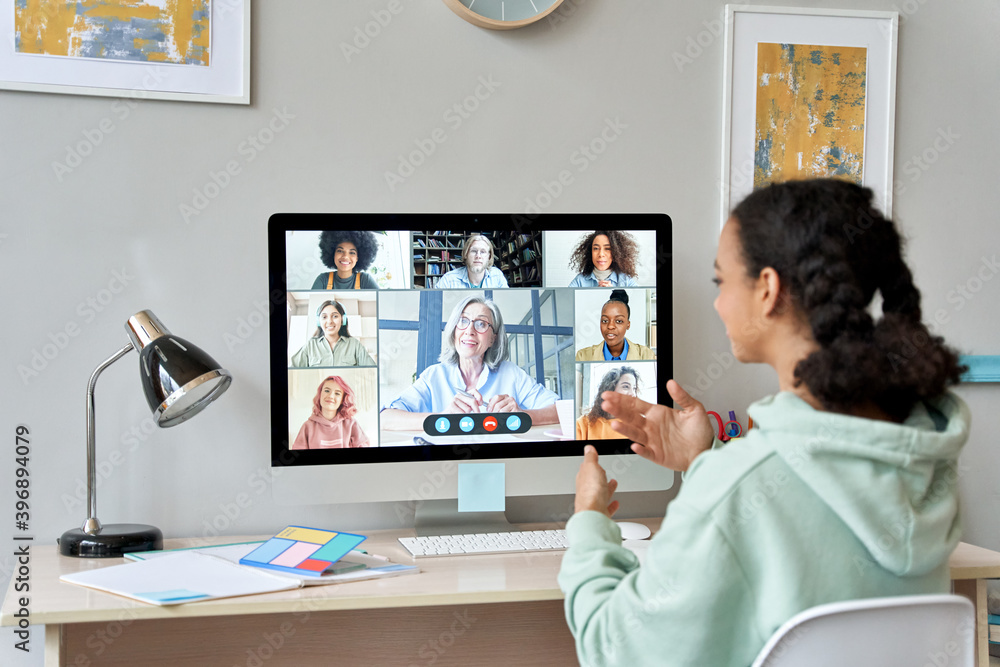
Distance learning or distance education is not new technology at all — it has been around for quite some time already. In fact, according to the article of Gu (2022), the first generation of distance education emerged in the mid-19th century, in which the main media was printed materials. It then developed throughout the decades, using the CD, radio, television, and eventually computers, which are still used until the present time. Distance education, according to Tomei (2007), consists of learning situations in which the students and teachers are located in different geographic areas at least for a portion of the class. Additionally, Sadeghi (2019) mentioned that distance education is a kind of education which students may not always be physically present at a school campAfrican teen high school girl college student distance learning virtual remote class, group online interactive lesson on video conference call talking with teacher on computer screen studying at home.us.

Distance education has its advantages and disadvantages. One advantage is that is can be practical for students who have different obligations, such as those with their own families and working students. In addition, They can be able to save files and readings sent by their instructors or professors. And students can attend classes at the comfort of their own homes.

Regarding the limitations of distance learning, it can have high chances of distraction for the students — the chances of losing track of deadlines and pending assignments is high. For some students, the technology of distance learning programs can be complicated, which can lead to some not grasping the technology well enough to catch up with his or her classes.

I find distance learning to be good and practical, but not too much of distance learning. Some classes can be online, but some have to be face-to-face in order to have that more personal interaction between the students and their teachers. As for its tools, in my personal experience, I used Google Classroom when I was a college instructor back in my home country, the Philippines for my classes during the COVID-19 pandemic.  I found it to be very user-friendly and I liked the fact that I could save PDF and PowerPoint files there for the students to peruse after my lectures. According to Pappas (2023), Google Applications for Education, which includes Google Classroom, is a powerful development tool for online education. Google Classroom has centralized storage data and it boosts the social learning aspect of online education; thus, this enables the students to benefit from the experience and skills of their classmates. One tool which I also found useful when I conducted my online learning classes was Khan Academy, wherein I utilized short videos to complement my lectures. I used videos sometimes so that the students will have a different form of learning, not just lectures from my PowerPoint slides. This way, they will further appreciate what I have been teaching them in my social science classes.


Currently, I am not teaching, as I am pursuing my PhD in Education and working in a different industry. However, my previous experience in teaching online classes during the pandemic from 2020 to 2023 taught me to appreciate distance learning more. It was practical at times (although it was sometimes stressful, especially during

Top view photo of girl watching through imac

Photo by Julia M Cameron on Pexels

COVID-19!), and it challenged me to deliver my lectures in a more engaging manner in order to make my discussions lively for the students. Teaching online also challenged me to be creative in teaching my students. With the current tools available for distance learning, I can say

that learning and teaching online will be even more advanced in the near future, especially with more students having their own gadgets like laptops and tablets. While face-to-face lectures will always be available, it is a good option also for the students to have their choice in having distance learning classes.


Posted in Uncategorized

Online Learning


    I am currently an in-person classroom teacher in an elementary school classroom, although I have had several opportunities during the covid pandemic to teach remotely. I would have to say that after transferring to a new school during the pandemic, and at a time where everyone was required to wear masks full time (even outside), no contact, no group work, all students in forward facing tables; moving to online learning came as a welcome relief! It was a relief to finally see my students faces for the first time after having taught them for half of a year. It was a relief to have everyone in a space where they didn't feel fearful and paranoid of spreading germs. It was a relief that students could meet and interact in groups to share ideas. Now that we are mask free (for the most part) I am grateful to be back in the classroom face to face with my students. 
    I rely heavily in my classroom on Google suites and make sure that all students are connect through both google classroom as well as Edsby to find digital copies of all of their units. Parents at my current school are active on Edsby and regularly use it to look at students assignments an print worksheets at home if needed. I have found this to be particularly useful as I commonly have students leaving for long periods of time, either on vacation or returning to their homeland for extended visits. This allows them to keep up with what we are doing in the classroom. Having all units available online keeps students and families accountable for their learning.

        Our class representatives and presenters for this topic outlined specific advantages to online or distance learning such as collaboration, student centered learning, special design of environment and material by instructor. I would say that a many learning theories can be seen throughout the different platforms, and that it would depend how you are using the platform and material and what the student expectations are. The effectiveness of online learning would be specific to the learner, where elementary school students certainly require not only the supervision available in a face-to-face classroom, but the structure and social interactions that come with in person learning. As students mature and become more responsible, having options for online learning could be beneficial for certain learning types and depending on the content. Obviously online learning requires a high degree of self-discipline.
        
        I found the section of the presentation on commercialization interesting as I thought about the different platforms that were at one time free and then came at a cost. Or tools such as Edpuzzle which I use regularly but am limited with the free version. There are certain online learning tools such as Mathletics that I find myself fighting for endlessly to obtain student accounts. This resource is expensive to purchase yearly subscriptions and since it is not supported division wide we have to seek parents council support to get class subscriptions. It is frustrating because after using both hard copy and online Mathletics for years, I have seen the benefits to students learning and progress in mathematics at an elementary level but yet it is so hard to obtain due to the price.

        As a student I appreciate the option to have online courses available to me through this masters program. As a teacher, I am happy to know that we could successfully go back online with students at a moments notice, but in-person learning at an elementary level is crucial to child development. As a parent of an elementary and high school student, I am beyond thankful that they are back face-to-face with their peers and teachers, up and about and out of the house daily!
Posted in Uncategorized

Tools for Online and Distance Learning: Reflections on Their Impact

At this point in my course, Introduction to Education Technology, it’s a good time to reflect on the various online and blended learning tools that we have explored so far. Personally, I have always stood for online learning tools as they save time, reduce physical strain and most importantly, make learning engaging and accessible. The role played by online learning during the pandemic cannot be overseen. This week’s group presentation on distance education tools has shed more light on how these tools are shaping modern education.

From the reading, Tomei, L. A, I got a comprehensive overview on how online learning is made effective through key methodologies and tools. The sections of this book illustrate how these tools find their roots in educational theory and are specifically designed to enrich the teaching and learning experience while also offering convenience and flexibility in their use. Moodle or Blackboard are examples of learning platforms or interactive learning environments in which both students and instructors can engage effectively. In today’s world these platforms allow learning to continue uninterrupted irrespective of geographical location of the learners.

I have been extremely impressed by the tool “Kahoot” which has also been highlighted in the video”10 Distance Learning Tools in Under 10 minutes“. The interactive quizzes in Kahoot allows real-time participation as well as make learning fun in an online setting. Similar to this is a tool called “Quizlet” which helps in memory retention and revision thus making learning enjoyable and effective. These tools can be incorporated into online academic presentations to make it more dynamic and interactive.

Gu, J’s  article underscores the historical development of distance education and how education has adapted to changing times. There has been a remarkable shift from correspondence courses to modern online platforms powered by technological advancements. Technology has supported the evolution from behaviourism to more collaborative frameworks like constructivism that enables learners to construct knowledge and learn through connections with each other. The article mentions about TPACK model that integrates technology with pedagogy in meaningful ways.

I would personally prefer to shift fully to an online format from a face-to-face class making an overall positive impact, using tools that would make it easier to maintain the same level of engagement as in-person classes. Platforms like Zoom, Google Docs, Microsoft teams etc make real-time collaboration possible making this transition smoother. This article also emphasizes that educators must have the right information literacy to use the educational tools effectively.

Overall, this week’s presentation highlighted that distance learning tools have been revolutionary in the field of education, making it simpler, engaging and supporting students and teachers worldwide specially during challenging times like the pandemic. Moving forward such tools can be integrated to make learning more enriching and accessible for all.

Posted in Uncategorized

Unlocking Potential: Online Learning Tools for Distance Learning and Neuro-divergent Students

This week’s focus is on the transformative impact that online learning tools have had on education over the past two decades. It is important to highlight that the pandemic has significantly accelerated this transformational process. The new technological resources that facilitate online and distance learning have revolutionized educational access, reaching learners around the globe. However, it is noteworthy that there are still students in our local communities who struggle to fit within the traditional educational system for a variety of reasons. A prevalent challenge is the complexity associated with neuro-divergent learners.

Often, educational environments adopt a one-size-fits-all methodology. In sharing this perspective, I do not intend to suggest that educators are not implementing differentiation strategies in their classrooms. Rather, I propose that the diverse makeup of classrooms presents considerable challenges for teachers in addressing the needs of all students. I believe that there is likely a correlation—if not a causation—between these challenges and the support provided to neuro-divergent learners.

Currently, I have the opportunity to work with a student diagnosed with Autism Spectrum Disorder (ASD) who experiences attentional challenges. This student is engaged in an intricate subject matter online and is thriving. He has expressed that the typical classroom environment is overwhelming for him. In the online learning setting, he is better able to concentrate and has begun to advocate for his own needs. For example, while he prefers not to make eye contact, he feels comfortable activating his camera when he has a question and is listening for the response. He then turns off the camera once the question has been addressed. If the camera were to remain on continuously, it would serve as a distraction, potentially leading to increased sensory overload and impeding his learning progress. By utilizing tools such as Google Classroom, Zoom, Microsoft Teams, and Google Drive, this student is able to modify his learning environment in a way that fosters successful communication of his understanding to the teacher.

There is a notable research paper titled:  Guiding Empowerment Model: Liberating Neurodiversity in Online Higher Education

https://arxiv.org/pdf/2410.18876

this research paper delineates several key areas of focus:
1. Time and Energy
2. Sensory Processing
3. Social Cognition
4. Reasoning
5. Executive Functioning
6. Core Skills

I see a connection on how online learning tools for distance learning not only helps neuro-divergent learners.  It is safe to say that this can then reach all learners in a positive fashion.  All students are impacted with the 6 key areas listed above.  Life is not static it has ups and downs but giving students and teachers a way to deliver and the student to receive the learning material in a manner that is adaptive in nature can provide positive outcomes.

Posted in Uncategorized