The Role of Technology in Supporting Effective Assessment

This week’s informative presentation in my course was on assessment technologies, the pros and cons of using digital tools in evaluating student learning. In this technological era, assessment technologies have been widely used in education. Looking deeply into what late educator Joe Bower pointed out, “Assessment is not a spreadsheet; it’s a conversation.” Though digital tools are highly efficient, they may reduce assessments to mere numbers thereby overlooking the depth of student understanding and engagement.

How do I devise effective assessment? - Teaching College

The reading Technology in education – 2023 GEM Report provided a powerful reminder that assessment tools can make education more inclusive, underscoring how technology can bridge gaps for unreachable learners like students with disabilities, enhancing accessibility and personalization. Assessments can turn into meaningful conversations rather than standardized processes with the help of tools that provide personalized feedback or even allow students to express their understanding in varied formats.

Dr.Erik Voss’s video provided valuable insights on learning-oriented assessment technology frameworks and integrating assessment with pedagogy. He underscores that technology is a supportive tool for assessment that has be continuous and reflective of learning objectives. Assessment should guide student’s growth and reinforce learning goals.

An Educator's Guide to Effective Performance-Based Assessments

Furthermore,the article 10 Informative Facts About Online Assessment Tools discusses the advantages of digital assessments as something that can enhance learning at the same time disadvantaged with issues like overemphasis on objective metrics. Even though multiple-choice questions and scannable answer sheets simplify grading,they seem to overlook the creativity in students. The need of the hour is a right combination of formative assessments, open-ended questions and peer feedback for effective student learning.

Finally, my takeaway from the presentation and readings is that integrating technology in assessments should ensure student engagement, equity and deep learning. Assessments must be conversational and interactive thus making education efficient and meaningful for students.
Posted in Uncategorized

Using assessment tools in an effective way

There is a lot of negativity that surrounds the use of digital tools for assessment and some of these reasons are warranted such as, it is distracting. There is absolutely no perfect solution or quick fix with regards to the teaching, learning or assessment process. However, it is imperative to explore different ways of doing such. There are numerous assessment tools with their pros and cons in using them. In doing this presentation, I have to appreciate how accommodating and adapting these tools can really be if I invest the needed time to understand them.

The article Ten Facts About Online Assessment Tools, highlighted ten factual ways in which online assessment can be used. It gave some interesting insights to alternate ways in which assessment can be given using these tools, and their benefits in doing so. He pointed out that “with the right assessment tool, you can create any type of exam paper using a variety of question types and in-house resource”. Even so, in order to select the right assessment tool and maximize on the potential of it, one has to understand how the tool functions. This will enable the user, both teachers and students to use the tool effectively and personalizing learning at any level.

Secondly, identify the needs of your students and utilize a digital assessment tool that cater to those needs. We might be super comfortable using a particular tool, but that may not necessarily work effectively for your students. After identifying their needs, determine what structure of assessment would suit them best. Investigate if that tool can provide tailored feedback and if it enhances critical thinking skills. Ask your self, how is the analysis of the assessment reflected? Am I readily able to identify the strength, weaknesses and learning gaps of individual students? These are just some of the questions I will be reflecting on when choosing my assessment tools in my future practice.

Having clear objectives, not only guide educators in selecting the right tools, but it also guarantee that the tool will be used effectively and optimally, based on the learning needs of each learner.


Posted in Uncategorized

Impact of Web 3.0 on education

There is a massive evolution in web over a period of time. In the beginning web 1.0 is introduced which allow the users to consume the information only and there were no possibilities for the users to contribute in it. Then web 2.0 allow the users to be interactive through the introduction of blogs, social media and other user generated content which help the learners to work in collaboration through discussions, group projects. Currently we have been shifted to web 3.0 which is also known as intelligent web. The use of technologies such as AI, block chain and machine learning has made this web more predictable, adaptable and personalized and has aligned with Education 3.0 in which the learning concept is student-centered, adaptable and personalized.

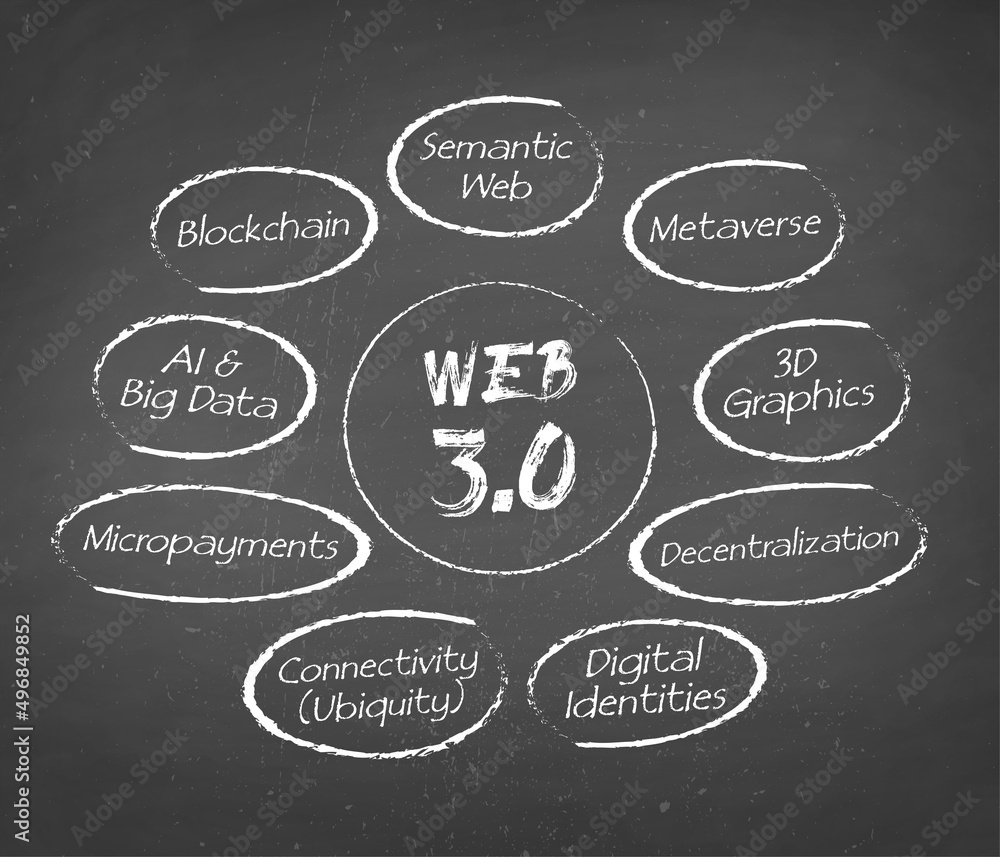
                          Web 3.0 structure, module, workflow concept on chalkboard background.

Education system has become more flexible, inclusive and accessible as a result Web 3.0 evolution. As it allow the users to find their own path and involve in it so that they can fulfill their individual needs. It also facilitates educators and learners to collaborate with each other at global level by crossing the institutional boundaries. Web 3.0 is beneficial for the students and the learners who have good access to technology and are good in handling digital tools and internet. Education 3.0 environment provides an opportunity to learners and educators to explore a large amount of information and find their learning path by engaging in the resources that are according to their interest and needs. However, the students and the teachers who are not tech-savvy and have limited access to digital tools are the ones who feel left out in this evolution process. Data privacy and security is another drawback of this Web 3.0 technology which impacts the users. Gerstein’s metaphor focus on the transformation of education system and in this process it is important to ensure that this advancement in technology benefits all the students as well as the teachers.

Web 1.0 to Web 3.0 Shaping the Future of Education

The societal view of how students learn within a classroom has not changed much over time. Fourteenth century illustrations depict a professor at the front of the room while students sit within a space and listen. If we entered a classroom today, we would likely find a classroom that is organized like this. However, the way the material is shared, and the type of learning has changed. I am going to unpack how the internet has influenced how students learn.  

Before search engines existed much of the content that was taught in schools revolved around information that was gathered from textbooks. New findings would often take time to make their mark in the world of education as it took time to write and publish the books in which students would learn from. In a way, students were always learning old information. Education during this time placed strong emphasis on reading, memorization, and being able to articulate the information that students were learning in their own words. It was fact based, forcing students to be able to regurgitate information in exams or assignments to prove their understanding of the material.

The introduction of Web 1.0 would also bring with it changes in how information was gathered for the world of education. The first generation of web pages allowed users to search for information and read about it. The owners of these pages would be responsible for updating the information on their pages. These early pages had been referred to as garbage dumps of information. The goal of these sites was to provide users with as much information as possible, often meaning that they were poorly formatted due to inadequate design. However, this provided a much quicker stream for information to be shared than books or encyclopedias. Web 1.0 also allowed educators to connect with students through online mail. This provided the opportunity for teachers to communicate with students in different areas or even other countries.

Photo by MART PRODUCTION on Pexels.com

Web 2.0 advancements in the internet would open the door for collaboration. Improved web design created an opportunity for more people to share their knowledge. Blogs, podcasts, social media to name a few gave people a platform to communicate with the rest of the world. People were able to comment on, listen, and view information rather than write and view read-only material. In the world of education, applications such as Google, Skype, Zoom, Wici pages, and Cloud based document sharing came into play. This presented teachers the option to connect with their students virtually, share information through online platforms, and gave students the option to work collaboratively on assignments at school or from home. Teachers could also place more emphasis on their students to take control of their learning since information was more readily available to them. Additionally, the way that students could provide evidence of their learning also changed. For example, rather than writing an exam on the current topic of study, students could collaborate with other classmates to create a multimedia presentation outlining their learning, and work on it collaboratively from home.

Web 3.0 proposes an interesting shift to a world outside of our own. Advancements such as virtual reality may play a key role in providing learners the opportunity to experience things hands on while still being in the classroom. The introduction of Artificial Intelligence (AI) may provide students the ability to get extra help outside of the classroom, acting as their personal tutor directly related to the material they are learning in school. Teachers can also utilize AI to plan their lessons, adapt material for students, and provide different options for content delivery. In addition, information is available faster than ever and it is essentially accessible from anywhere. This forces teachers to move beyond read and memorize forms of teaching and encourages them to get students to apply their knowledge in different ways.

Photo by Jessica Lewis ud83eudd8b thepaintedsquare on Pexels.com

With all great advancements there are always areas of concern. While the world of Web 3.0 sounds exciting and intriguing. We need to realize that the introduction of Web 3.0 may also be furthering the digital divide that exists within many of our communities. Not all families are able to afford internet packages, let alone a device that allows them to connect. If education is to change as fast as the internet is expanding many students and school divisions may begin to feel the impacts. The lack of funding is going to be one of the largest barriers that education is going to face. Until all students have equal access to technology, the use of these advancements will never be fair. Secondly, the introduction of AI poses a huge risk to the integrity of our education systems. Students can generate written assignments with the click of a button. This makes extra work for educators to ensure that the assignments their students are handing in are legitimate and not AI created. I believe this race between AI and counter AI will be a continual battle, with new platforms reaching the internet on a consistent basis.

Short Sighted Returns With Long Term Implications

I grew up in a time where knowledge seemed “concrete”. There were computer rooms but the www. age would not arrive until the year after I finished high school. We did not know what was coming around the corner as far as computer technology, except that it was going to change everything. Some people scoffed at the idea; blew it off as another “fad” like big hair and Venetian sun glasses. As the years progressed, however, we could see that this was not the case. I am not sure, though, how many experts believed that it would get to where we are today. I am not saying that the web and the information that we can find is not great, but the algorithms, data collection and ways this is used for profit are not always ethical or healthy especially for youth.

The Social Dilemma is a documentary that I used in a class a few years ago. It was shocking to me and to some students to learn about how our smartphones were collecting so much personal data for profit. As a class, we did an experiment to validate what we watched, and after we had a specific conversation about a product and did one search on our phones, we monitored how many of us had related pop ups in our phones for the upcoming weekend. The results startled all of us. Nearly 100% of us were targeted with adds for that specific product. Since then, I am wary about my cell phone.

Social media is another aspect that seems great, and in many ways it is, however, as we have learned, there are drawbacks to its use as well. I have noticed , as many of you probably have as well, that students are not gaining many of the social skills that older generations had. Online bullying and the results of that are rocketing. My family has not been immune to these negative impacts, as we had a young relative attempt to take her own life last year. This is not isolated, and some regulations will eventually be developed, but until then it will be up to individuals to find that balance.

I am older. The issues with being massively connected to social media, or tech in general, are not hard for me to handle. I do have one social media account but I check it maybe once or twice a week, and I never post anything other than a “Happy Birthday” or ” my condolences” once in a while. I constantly fall behind on emails and texts, even miss most phone calls, because I do not like carrying my phone. My opinion is, if you need to talk to me that bad, come find me, or call my office and someone will track me down. The people around me know this and adjust. My wife hates it, but , that’s me. I feel optimistic, however, that we will find how to balance all of this in our lives. The right tools just need to be in place as we head into Web 3.0 and 4.0.

Posted in Uncategorized

The Anxious Generation

As a staff, SCC, and community Rouleau has been reading the Anxious Generation by Jonathan Haidt. Along with the Social Dilemma, the book captures the drastic change that has occurred since 2010 when pre-teen and teenagers made a switch from flip phones to iPhone 4s and other smart phones with front facing cameras. Combined with a shift from a play-based childhood to a phone-based childhood, every marker of self harm, anxiety, mental health diagnoses, and suicide rates have increased faster than at any other point in history. It should be labelled as one of the largest experiments ever conducted on our youth and frankly is the largest failure and let down of our youth in history. The evidence is real and all points towards the shift from Web 1.0 to 2.0 and widespread use of social media. I believe, along with a lack of sleep and constant need to be connected and feeling judged, the combination of all those factors has made it difficult for our youth to cope. The book also argues that parents have reduced the amount of responsibility we place on our youth and their ability to cope in the real world is a new struggle. Fewer teens are getting their driver’s licence, fewer teens are able to have an in person conversation, and fewer teens are having part time jobs. Teenagers are staying at home for longer and have a dismal view of their future. 

Haidt suggests four strategies for reversing these effects on the next generation. These include:

  1. No smartphones before high school
  2. No social media before 16 years old
  3. Phone free schools
  4. More independence, free play, and responsibility in the real world.


The author suggests that although Millennials were the first teenagers to have cell phones, the effects of them using flip phones did not have a negative impact on their mental health. He suggests that if parents would like to stay connected with their preteens they should purchase them flip phones instead of smartphones. 


Haidt indicates this needs to be a community push and to work collaboratively as the pressure parents will feel to purchase their teenager a smartphone is real. If the entire peer group has a smartphone and one child doesn’t, that can be socially isolating and also have a negative impact on the child. I would recommend this book to everyone and look forward to hosting community nights and parent nights with the hopes of some collective action.

Posted in Uncategorized

Distance Learning Platforms

Distance learning platforms require a number of traits in order to help students stay organized, achieve success in their courses, and ultimately learn. My familiarity with distance learning technology include the UR Course platform, Sask Distance Learning Centre (Sask DLC) Moodles, and Google Classroom. Each of these has aspects which I find positive and negative. The characteristics which I find students thrive from the most is a layout in which the information is readily available, easily to find, and tracks their progress. For example, on the Sask DLC platform, students can easily see what they have completed, what grade they earned on each task, and what their upcoming tasks are. The information is organized chronologically and broken down into sub unit sections. This is important as most high school students are visual learners. 

Katia’s strategy of keeping URCourses clean and having all information located in external Google Docs links is beneficial as Google Docs can be easily saved/copied from year to year and keep the URCourses platform easy to navigate. 

For all students, the area I see lacking with all distance learning platforms is a convenient (perhaps scheduled) way of meeting with the teacher or professor. The term “anxious generation” as described by Jonathan Haidt refers to the growing inability for our teenagers, especially since 2010, to cope and function in the real world. With a generation of students who struggled to communicate in the real world, I constantly see high school students struggle to succeed in their online classes due to an unwillingness to contact the teacher for assistance. For an online teacher, the out of sight out of mind attitude hampers our students’ ability to learn and have success. Students follow a trend of struggling on one unit or lesson so they move onto the next one and ultimately fall behind. If online platforms had built in software to connect the student to the teacher in an instant, students may be more apt to contact the teacher. Sask DLC also needs to be more proactive in reaching out to students on at least a weekly basis to help students’ achieve success. This is partly a fault of the online platform and partly the fault of humans taking the courses. 

As a user of Google Classroom, I appreciate how easily it integrates with the rest of the Google software, including Docs, Sheets, Forms, and Slides. I’m able to correct and add comments to students’ work. I’m able to assign certain tasks to certain students and collect information from students using Google Forms. The use of Google Classroom has transformed the way I organize my classes and deliver my content. It’s created a bit of a double edged sword in the sense that students can stay caught up when they are absent, but also feel less of a need to attend in person classes. Creating a balance of maintaining a desire for in person learning while providing some content online seems to be a new challenge.

Posted in Uncategorized

Navigating the Double-Edged Sword of Web 2.0 along with Insights from The Social Dilemma Movie

The movie i.e. The Social Dilemma available on Netflix helps us in analyzing Web 2.0. This is an incredible film that makes one think regarding particularly how social media app ever manipulate the users, through advanced algorithms aimed at achieving highest engagement which endangers the psychological stability of citizens as well as stability of functioning society. This movie also shows the opinions of former managers and employers of major technology companies who freely speak of the creation of models, which put the interests of companies before people, which gives an idea of both positive and negative impact of social platforms on people and society.

A number of positive effects exist of which cooperation stands out as being the most prominent. Applications such as Google Docs and Slack make it possible to work effectively in teams regardless of their location hence making group projects easier. This provides group work skills and also improves on the quality character of learning by accompanied diverseness and creativity. Moreover Web 2.0 offers educational materials in given specialization with the help of internet resources. Selections from YouTube, Khan Academy, Coursera and similar sites provide the students, and increase independent study and classroom support and improve overall course coverage.

Besides, the social web is effective in teaching globalization because it brings together people from diverse cultures. Through such an exchange of ideas and experiences the students come to better understand the different cultures and feel more compassionate towards their peers from other countries, thereby better preparing for globalized environment. Additionally, creativity is engaged through Web 2.0 platforms that allow individuals to perform artistic activities through, for example, Instagram, TikTok or YouTube. This does not only encourage the growth of talents, creativity and innovation but also affords the students the opportunity to make use of such abilities.

However, Cyber bullying is an issue of significance here since social networks become

a place for harassment and bullying, further empowered by anonymity. The effect can cause severe emotional harm and trigger anxiety, depressive disorder, and thoughts of suicide. Furthermore, doing a search on the internet users come across a myriad of information making it hard to differentiate between a good source and a bad source. Such confusion can give out wrong information and hence affect the whole decision-making process.

Technology reliance can also reduce the quality of direct interpersonal interaction along the specified channel. This is because during the time we spend-online, looking for work, studying, engaging in hobbies etcetera, real social and emotional skills atrophy from lack of use. In addition, the several notifications that one receives on social media can break his or her concentration during a study session or even a classroom session and therefore one is likely to perform poorly in his or her academics and also productivity among the students becomes very low. Accordingly, it is all about on algorithms that control what content gets to the individuals on social media platform which can potentially put people in boxes that only give a view to the biased perception of the world. This acts as social rift and also limits meaningful debate on the differences in opinion.

Moreover, teachers, parents and the society at large should embrace the positive use as well as curb the negative effects. It is, therefore, possible to use Web 2.0 technology to enhance the common good by promoting practices that support the creation of digital literacy, positive web practices, and positive Web 2.0 cultures. This format does not lose chain of reasoning while explaining positive and negative impact of Web 2.0 in a systematic way.

I have read these article for this blog-

Web 2.0 – Digital Assets for Teaching Technologies (Evolve Your Teaching Platform)

https://www.investopedia.com/terms/w/web-20.asp

https://www.unicef.org/end-violence/how-to-stop-cyberbullying

Posted in Uncategorized

Education 3.0

Gerstien’s metaphor completely relates to my experience at Byju’s where we as an educator  leverages the technology and digital tools to create more interactive and child- centered learning path for the individuals. The concept of Education 3.0 resonates how education is evolving from traditional setting to more interactive, technology driven and personalized model similar to the transformation from web 1.0 to 3.0. I believe Gerstien’ s metaphor calls for an urgent need to reflect on our practices in education and should work to bridge the digital divide and make advanced tools easily accessible and approachable for every student and teacher regardless of their backgrounds.

I think the shift to Web 3.0 has reshaped education and brought unique perspectives. With Education 3.0, the role of students have changed from mere passive learners to creators and contributors which results in breaking all the traditional boundaries and concreting their own lifelong learning path. However, with the increase in autonomy, there comes new demands on students as well as on teachers that needs to be addressed. Firstly, equality in technology or internet access for all students is difficult to achieve which could result in educational disparities among the students who belong to rural areas. Secondly, sometimes the complex nature of Web 3.0 overwhelms the students and they have not developed strong time management, focus, or motivation skills which could further create pressure on them.

This adaptation to Education 3.0 benefits particularly those students and teachers who have the expertise in using digital tools and navigating technology. On the other hand, the students who really struggle with the technology or have limited access to the digital tools feel disadvantaged by the shift to Education 3.0. In the BYJU’S we regularly saw many children who did not have an understanding learning environment at home face challenges in persisting with their peers.

Similarly for the teachers, who are not flexible and not tech-savvy with digital teaching may struggle to adjust and lead to create gaps in student engagement and support. However, the teachers who are open to integrate the technology into their teaching methods will create a dynamic learning environment. 


Posted in Uncategorized