There is something special about submitting the last assignment of the course – on the one hand, you are excited for the winter break; on the other hand, you realize that you will miss the classes that have taught you so much and the people who you shared that learning experience with.
Today, I am excited to present my summary of learningto you. Please enjoy the short video below and let me know what you think!
The tools and apps I utilized to create my summary of learning:
Instadoodle – an app I used to make doodle-like videos;
Microsoft Clipchamp – a video app I used to glue separate video snippets together and set up background music;
Vidma Recorder – an app that I recorded snippets of my screen for the clips where I talk on camera;
Openart AI – a website where I generated some of the images in the video;
Embedded voice recorder app on my phone – to record my voiceover of the doodle video clips.
The equipmentthat helped me create the video:
laptop
phone
ring light (to record the snippets where I talk on camera)
I would like to express my sincere gratitude to Dr Katia and to each of my Educational Technology classmates for your invaluable contribution to my knowledge.
Wow! As the saying goes, learning is a lifelong journey. My experience in this course (Foundations of Educational Technology: History, Theory, and Practice) has been truly enlightening. Despite using technology in my teaching practice and instructing others on its implementation in science education, I hadn’t delved into the philosophical underpinnings and the complexities of commercialization and commodification in the realm of digital technologies. To ensure a safe journey, the pilot (Prof Katia) instructed the class to conduct a security check. This involved examining my understanding of educational technology, which I viewed as the ethical application of technological resources and processes to improve teaching, learning, and performance. Then certain guidelines and roadmaps tagged theories of knowledge and learning were explored. These roadmaps actually laid a foundation for how to plan and establish strategies that align with my student’s needs when teaching or trying to use technology in the classroom.
Roadmap for navigating the use of technology
Then the journey began as we navigated various milestones (technology tools) used to impact learning in the classroom. Those weeks of exploration were a playground of ideas and reflection for me. I learnt a lot from all the great presentations, and they really enhanced my understanding of how technology can be effectively implemented in classrooms. However, some concepts, such as assistive technologies, particularly resonated with me as they challenged my preconceived notions. I had always associated assistive technologies with individuals with disabilities, but the presentation changed my assumption. Moreover, drawing on the discussion on assistive technologies, I realized that I have used screen readers and adaptive quizzes in my personal practice. Talking about the AI in education presentation, I think that was also amazing.
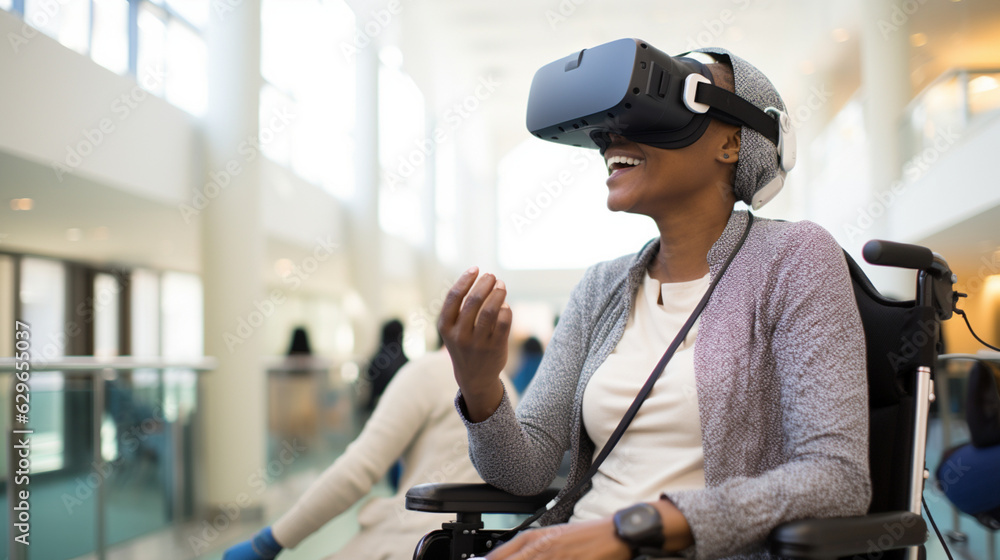
A Man in a Wheelchair Using a Virtual Reality Headset
The presenters shared some useful platforms that I have begun exploring, and that’s another great hit in my learning experience. I also gained insights into strategic ways to engage K-12 students with generative AI. While I think the coding and makerspace presentation was intriguing, unfortunately the presenters were unable to fully engage the class in further discussions due to time constraints. Reflecting on my learning journal, where I explored various learning philosophies such as constructivism, pragmatism, and connectivism, I considered how these philosophies could be enhanced with digital tools like Padlet, social media platforms, Zoom, Arduino, ChatGPT, and Kahoot. A key question I ask myself is, “Which philosophy best aligns with my teaching practices and technology use in the classroom?”
Below is my summary of learning.
I am grateful for the opportunity to learn alongside such wonderful colleagues. Thank you all for sharing your knowledge, time, insights, and personal experiences. I would also like to express my gratitude to Professor Katia for teaching this course and providing us with a platform to share our ideas. Here’s to a successful 2025!
There are many theories about teaching that many educators apply in their teaching process. I have read and tried several teaching theories to find suitable teaching theories that suit me so that I can apply them in my classroom. After I read The nature of knowledge, I began to reflect myself in which theories that I currently apply to teach my students in the classroom. I have just realized how I used to apply objectivism philosophy in my teaching activities before the Covid-19 pandemic. I believed that learning and teaching could only me successful when both teacher and students physically present face to face. Covid-19 pandemic has changed my perspectives in seeing things. I was in many situations where I taught my students virtually at that time. I realized that learning and teaching can be done through technology tools. The other teaching philosophy that I always apply in my teaching activities is behaviorism. I personally believe people can change through habits. Habits that are repeatedly done over and over again will bring impacts to the people. I used to teach kindergarten and elementary-level students. At first, letting the students follow the habits might be very difficult. As time goes by, they begin to understand and get used to those habits. Greeting teachers, praying before they eat, and remembering magic words (thank you, sorry, and excuse me) are just a few habits that I want my students to know. Creating unique hand-clapping to refer to a meaning.
There are also many theories about ways to teach students. I have read the article about the learning pyramid. This is actually very interesting. It gives colors to educators in seeing the effective ways to maximize students’ learning process. All information is not necessarily must be taken. As educators, we should know which information is informative and which is not. From the article, it stated that students tend to have less understanding when it comes to reading activities. On the other hand, learning by doing learning activities tends to give more understanding to students. Without this learning pyramid information, I think teachers can logically think that almost most students are quite difficult when it comes to textbook reading and etc. I totally agree that mixing and combining several ways of teaching can enhance students’ interests in learning.
I have just realized that I can find similarities between my teaching philosophy with Skinner’s. After reading Skinner’s teaching machine, I totally agree with how Skinner believed people change through their surroundings. People are known as easily adapted to new environments. I always have a perspective to bring fun activities to my students. I want through those fun activities students can learn as well as play at the same time. I usually call it educative games. I always prepare leveling activities from the easiest to the hardest. I have applied this kind of activity but did not know that actually, it actually refers to Skinner’s theory.
This is the link to my presentation on my summary of learnings this past Fall 2024 semester. https://www.youtube.com/watch?v=sIcnvl93i4Q
Thank you to everyone, including to Dr. Katia Hildebrandt, for making this learning journey in EC&I 833 an enjoyable one! Good luck to all of us as we continue our graduate studies and enjoy your December/Christmas break!
Hi everyone! Below is my summary of learning. You should be able to first click on the house icon, and then each of the titles in the numbered sections. Also, if you click the plus signs, there will be little interactive questions. Some of the interactive questions where it is an opinion answer, I chose... Continue Reading →
Nowadays, Generative AI has integrated into our lives in such a way that we can’t even think of living without technology for a second. My journey of teaching has been reshaped through generative AI. As a teacher, I have witnessed how AI has the potential to transform the educational experience and provide a better learning environment especially for those who belong to remote areas.
Impact of AI on my Teaching Journey
Drawing from my experiences, As a teacher, the major challenge was adapting your pedagogy according to the diverse learning styles of students due to limited resources. However, Generative AI has been the game changer in providing a personalized learning environment in the classroom. With the support of AI tools like chatGPT, canva, Khan academy or Kahoot I have provided my students an interactive classroom environment where they can explore unique ways of teaching and learning. They can learn through games on Quizzes app or they can have customized practice problems or visual explanations to the content. Generative AI has played a crucial role for students in rural areas, where the access to the resources or quality education is often limited. AI tools have given opportunities to students to explore topics like coding or STEM and the future of coding in the ed-tech industry has drastically risen in the world. While working as an Educator, I have integrated Cognitive Coaching techniques in my teaching style to understand my students’ emotional and social needs. Generative AI tools have supported me in achieving this success for my students.
Role of Generative AI in My Personal Life
Beyond teaching, Generative AI has been beneficial in my personal life. From cooking my favorite dishes to organizing my day, AI has been very supportive in making my everyday activities effective. Various AI Apps like Fitbit have been very helpful in tracking my health progress and are a major part in achieving wellness goals. AI boosts our personal lives by saving precious time, promoting fitness and fosters creativity. However, every coin has two sides, Thus leveraging Generative AI fully is a huge challenge. There are certain reasons like sometimes uneven internet connectivity, lack of digital tools or limited professional teachers which comes as hurdles in a path to be successful. However, I believe AI has the power to bridge the gaps of urban rural educational division or provide equal opportunities of quality education to underprivileged students.
The Future of AI in Education
I believe the future of Generative AI is to revolutionize the education system by making it more accessible and engaging. Even the students from remote areas would have equal access to learn using AI tools. AI should be considered as a tool for creating opportunities for excellent growth and better learning.AI would be beneficial not only for students but for teachers also in reducing their administrative work so that their focus should only be on fostering creativity and better learning environment in the classrooms. Through Generative AI, I aim to encourage my students to achieve goals, think big and embrace change for their future.
Artificial Intelligence, also known as AI, has been a buzzword for the past decade or so in our society. All this talk and news of how AI is changing our world, how is it used in today’s society, its effects on education, are all essential in linking AI and our society. But to define AI first, according to Heaven (2024), “AI is a catchall term for a set of technologies that make computers do things that are thought to require intelligence when done by people. Think of recognizing faces, understanding speech, driving cars, writing sentences, answering questions, creating pictures. But even that definition contains multitudes.” Another definition by Stryker and Kavlakoglu (2024) explains that “AI is technology that enables computers and machines to simulate human learning, comprehension, problem solving, decision making, creativity and autonomy.” In the field of education, AI refers to the use of computer systems that can perform tasks typically requiring human intelligence to enhance learning experiences, streamline administrative processes, and support educators.
From the definitions of AI in the preceding paragraph, it can be deduced that AI can be defined in a variety of manners and utilized in many ways. It is actually being used nowadays, though, depending on the part of the world and culture, it may or may not be used widely. This can be true for how AI is presently used in education. In my personal experience, I am not using generative AI at work, because where I work now, our company has its own set of propriety software. And as a former teacher (2010-2023), I avoided using AI to check my students’ work because I concentrated more on how they wrote essays and how I understood their essays, and some of my exams were objective (multiple choice) — I previously handled university students (usually freshmen). I am a PhD student now, and I do not use AI at all because I just follow the APA format when doing research and citing the work of others.
AI obviously has its advantages and disadvantages in society. Timbo (2023) mentioned its pros and cons. Its advantages include 1.) AI reduces human errors, 2.) provides 24/7 support, and 3.) automate repetitive tasks. Its disadvantages include 1.) AI does not understand the human experience, 2.) may lead to higher unemployment rates, and 3.) costly to create. It is true that for corporations, especially large corporations, AI can be able to streamline business operations, thus maximizing profit while minimizing costs. However, more people may be unemployed in the future because of AI and robotics, which is obviously a disadvantage to the employees affected. In education, AI programs and software can be used by students for cheating — not writing their own essays but by making certain software do it for them.
It is up to us, as human beings, to use AI responsibly. As employees, employers, teachers, and as students, we should use AI as a tool properly. Even though we are experiencing the rise of it and its inevitability to be included and utilized more and more in our daily lives, we should not let AI ruin our lives, rather, we must use it positively for us to have more convenient lives. By using AI in the proper manner, the world will be more productive, without having to affect human lives negatively.
This week's presentation has honestly given me hope for education. Initially I was hoping that I would have been able to snag AI as my research topic, but I am very grateful that people who have far more experience with AI than myself were able to enlighten us on the topic.
My experiences thus far with AI have been relatively minimal. As a teacher, before this presentation, I had only really dabbled with Diffit and used it to create grade appropriate reading passages and comprehension questions. With Diffit, I still commonly print hard copies of reading material and tasks for students and grade paper copies, although I have used Google Form responses as well. At the grade level that I teach, I have only had a couple of students whom I suspected had used ChatGpt to generate writing. I was met with considerable backlash (from guardians) when I questioned them about it.
Since the AI presentation this past Monday, I have created accounts on three new platforms; ChapGPT, Magic School, and Curipod. I have begun playing around with, creating new content, and am excited to continue this exploration. I appreciate the option to choose complexity and create content that is specific to learning needs. This week I lead my first Curipod lesson with my grade 5/6s. The quality and quantity of the AI generated feedback for each student is not only individualized but is something that would have taken me as a teacher probably over twenty hours to provide. As teacher workload continues to increase and access to texts and resources seems to decrease, AI tools provide a means for teachers to lessen their workload and meet the complex needs of students. User friendly programs make utilizing AI as a tool in the classroom more feasible.
In Advantages and Disadvantages of AI in Education, Clugston points out that the presence of AI in education "calls for enthusiasm and caution" (2024). It became quickly apparent during our in-class polls during the AI presentation that we, collectively but also as individuals, have very mixed feelings about artificial intelligence. It was pointed out by the presenters that these mixed feelings have been a constant throughout history with the implementation of new technologies. The fact that we think critically about things isn't necessarily a bad thing, but I think more often than not this sort of fear or uncertainty is born of resistance to change. As with any type of new technology or tool, the focus should be on using it as a tool and developing a healthy relationship with it.
I don't think that AI can replace teachers, but will hopefully just continue to make our jobs easier and more effective. Teacher burnout is real and AI might be our saving grace.
In today’s fast-paced digital world, Artificial Intelligence (AI) is no longer a futuristic concept; it’s a reality that is already present and currently transforming how we live, work, and learn. So, what exactly is AI? IBM’s article on AI, tells us a lot about it. To simplify it, AI is a branch of technology that allows machines to perform tasks that ordinarily require human intelligence. These tasks include learning, understanding, problem-solving, decision-making, and even creativity. For instance, AI is behind the software that recognizes objects in images, facilitates language translation, and suggests products based on our browsing habits. In its simplest form, AI utilizes algorithms and vast amounts of data to analyze, learn, and make decisions autonomously.
What is Generative AI?
A fascinating subset of AI is Generative AI, which goes beyond the conventional scope of AI by creating new content be it text, images, music, or even videos. Unlike traditional AI which typically focuses on recognizing patterns or making predictions, Generative AI generates original works based on user input. One notable example is OpenAI’s ChatGPT, which can draft essays, answer queries, and craft imaginative stories. Similarly, tools like DALL-E can create stunning artwork solely from textual descriptions.
These generative technologies rely on advanced deep-learning models inspired by the human brain. During the “training” phase, these models absorb patterns from large datasets encompassing text, images, and videos. Once trained, they can produce fresh and original content tailored to user prompts. For example, if you prompt DALL-E with “draw a futuristic city at sunset,” it can generate an image that matches your description, even if it has never encountered that specific scene.
Uses of Generative AI
Generative AI is proving to be a game-changer in various sectors, especially education. Here are some innovative applications:
Personalized Learning Materials: Educators can leverage Generative AI to craft lesson plans and instructional materials tailored to specific needs.
Tailored Learning Experiences: By analyzing student performance, Generative AI can create personalized content that addresses individual learning gaps.
Data Analysis for Insights: AI tools can analyze student data to unveil learning patterns, enabling educators to make informed decisions about teaching strategies.
Writing Assistance: Tools like ChatGPT can support learners and educators by aiding in drafting emails, and poetry. They provide suggestions and grammar checks to enhance written communication.
Interactive Entertainment: Generative AI can enhance student engagement through personalized movie recommendations or by designing interactive video games, even allowing for conversations with AI-powered chatbots for a more immersive experience.
The integration of AI in educational settings is significantly enhancing the learning experience, refining teaching methods, and streamlining administrative tasks. Like any technology, AI has its advantages and disadvantages, Brendan highlighted some of them that require careful consideration.
Pros:
Personalized Learning: AI adapts lessons based on individual student strengths, weaknesses, and learning paces. Intelligent tutoring systems can provide immediate feedback and instantly identify when students struggle and modify content accordingly.
Time-Saving Automation: AI alleviates educators from routine tasks like grading and scheduling. AI-powered grading systems can rapidly assess assignments, allowing teachers more time to engage with students.
Increased Engagement: AI introduces immersive technologies such as virtual reality (VR) into education, making learning interactive and enjoyable. Students can explore historical sites or safely conduct experiments in simulated environments, boosting motivation and interest.
Scalability and Accessibility: AI-driven online platforms can deliver quality education to a larger audience at reduced costs, providing valuable opportunities for underserved communities.
As we move further into the digital age, artificial intelligence (AI) is becoming an integral part of our daily lives, including the educational landscape. While the potential benefits of AI in education are exciting, we need to address the challenges it brings to ensure a future that enhances learning without compromising essential values.
The Cons
Data Privacy Concerns: The effectiveness of AI systems often hinges on the collection and analysis of vast amounts of student data. This reliance raises significant issues surrounding data security and privacy. A misstep in data management could lead to breaches, putting sensitive information at risk and undermining trust in educational institutions.
Over-reliance on Technology: As we embrace AI tools, there’s a danger of becoming overly dependent on them. Technical failures or cyberattacks could disrupt the educational process, underlining the importance of maintaining a balanced approach to incorporating technology in classrooms.
Loss of the Human Touch: One of the most pressing concerns is the potential loss of the “human touch” that traditional education provides. Teachers do more than impart knowledge; they mentor, guide, and offer emotional support to students. While AI can enhance efficiency, it lacks the empathy and understanding that human educators provide. A student facing personal challenges may require support that AI simply cannot offer.
Facilitating Cheating: AI can unintentionally create avenues for academic dishonesty. For instance, AI-powered tools that assist with writing or problem-solving may allow students to bypass their assignments, undermining the very integrity of the educational system.
Reflections on the Future of AI
Looking ahead, Clugston’s post on the future of AI is both thrilling and transformative. AI promises to reshape how we work, live, and engage with one another. Envision starting your day with an AI-powered assistant that has already organized your schedule, letting you know about your preferences and potential traffic delays. That’s great! And it’s just the tip of the iceberg!
In the workplace, AI could become a vital tool that automates routine tasks and boosts productivity. For example, instead of dedicating hours to grading papers, teachers could use AI to instantly assess student work, provide tailored feedback, and recommend resources based on individual learning needs. In healthcare, AI diagnostic tools could analyze medical images or tests much faster than human counterparts, aiding doctors in making precise decisions while still allowing room for human empathy in patient care.
AI’s transformative power holds exciting possibilities for enhancing productivity, creativity, and decision-making across various fields. As we deepen our understanding of these technologies, we can better harness their capabilities to create a brighter future. Whether through content creation, personalized learning, or innovative problem-solving, the potential applications are vast.
To wrap it up, while the rise of AI and its branches, such as Generative AI, offers remarkable opportunities for improving education, we must remain vigilant. Addressing challenges like data privacy and over-dependence on technology is crucial. By striking a balance between leveraging AI’s advantages and maintaining the core values of education, we can ensure that technology enriches the learning experience rather than complicating it. The future is indeed bright, and it’s up to us to navigate it thoughtfully.
To get a glimpse of AI now and how it might evolve soon, I crave your indulgence to watch the 8+ minute video below and share your thoughts.
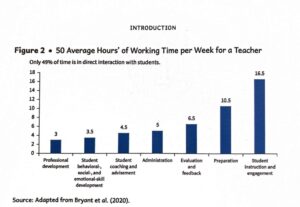
As we look towards the future, the integration of generative AI in education promises to revolutionize the teaching profession. By automating and enhancing various aspects of a teacher’s work week, generative AI will allow educators to focus more on personalized and relational instruction, ultimately benefiting student learning and development. Here’s a glimpse into how generative AI will reshape the work week of a teacher.
One of the most time-consuming tasks for teachers is lesson planning. Generative AI can significantly reduce this burden by creating comprehensive lesson plans tailored to specific learning objectives and student needs. Generative AI can analyze curriculum standards, student performance data, and educational resources to generate engaging and effective lesson plans. This means teachers can spend less time on preparation and more time on refining and personalizing these plans to suit their unique classroom needs. When Mitch, Ryan and I presented on Generative AI we discussed tools such as MagicSchool that is wonderful resource. There are many other tools that can be accessed.
Grading and providing feedback are essential yet labor-intensive aspects of teaching. Generative AI can streamline this process for example I was working with students on how to create a setting for a story. We were using Padlet and Curipod. The Padlet was used to help student mind map the story. Curipod was wonderful for I had students first draw a picture pertaining to the setting in their story. Then I had students write out the details of the setting. Curipod was able to provide feedback to them. When I went through the feedback it was very useful and was great constructive feedback for students. That generative AI detailed feedback on student work, highlighting strengths and areas for improvement for me is a game changer.. This allows teachers to view comments from a dashboard and then focus on the students that need more guidance. As a result, teachers can dedicate more time to one-on-one interactions with students, that need more intensive follow up.
Administrative duties, such as attendance tracking, scheduling, communication to parents and students and reporting, often take up a significant portion of a teacher’s time. Generative AI can automate these tasks, ensuring they are completed efficiently and accurately. I have used CANVA Whiteboard to show teachers how get students input and then efficiently develop an email from their input on what they learned. In a fraction of the time teachers can provide accurate and timely updates to parents.
As mentioned above, generative AI can analyze student data to identify learning patterns, strengths, and areas where students may need additional support. Teachers can use these insights to tailor their teaching strategies, ensuring that each student receives the attention and resources they need to succeed. Mastery of learning from Bloom’s Two Sigma Problem comes to mind. This personalized approach can foster a more inclusive and supportive learning environment, where every student can thrive instead of surviving. Just like what Benjamin Bloom has stated the importance of lowering the level of perseverance a student needs on a day-to-day basis. What is crucial is to replace the of perseverance with increased encouragement for their teacher.
The human connection in education is irreplaceable. With generative AI taking care of many of the logistical and repetitive tasks, teachers can invest more in building strong relationships with their students. They can spend more time mentoring, counseling, and supporting students’ emotional and social development. Especially since the pandemic we have seen students struggle at the same time they became more connected in the digital world. It shows that students need that relationship with their teacher. It is more important now then ever before.
Generative AI holds the potential to transform the teaching profession by alleviating the workload by the above points I have made. teachers can then channel their energy into more relational and personalized instruction (Bloom), ultimately enriching the educational experience for students in a collaborative environment. We must always be vigilant in addressing drawbacks from generative AI. Technology will always have positive and negative aspects. Based on what we discussed in this blog I believe that the future of teaching looks brighter, with generative AI serving as a powerful ally in the quest to provide high-quality education for all.





 The Future of AI in Education