The Role of Technology in Assessment

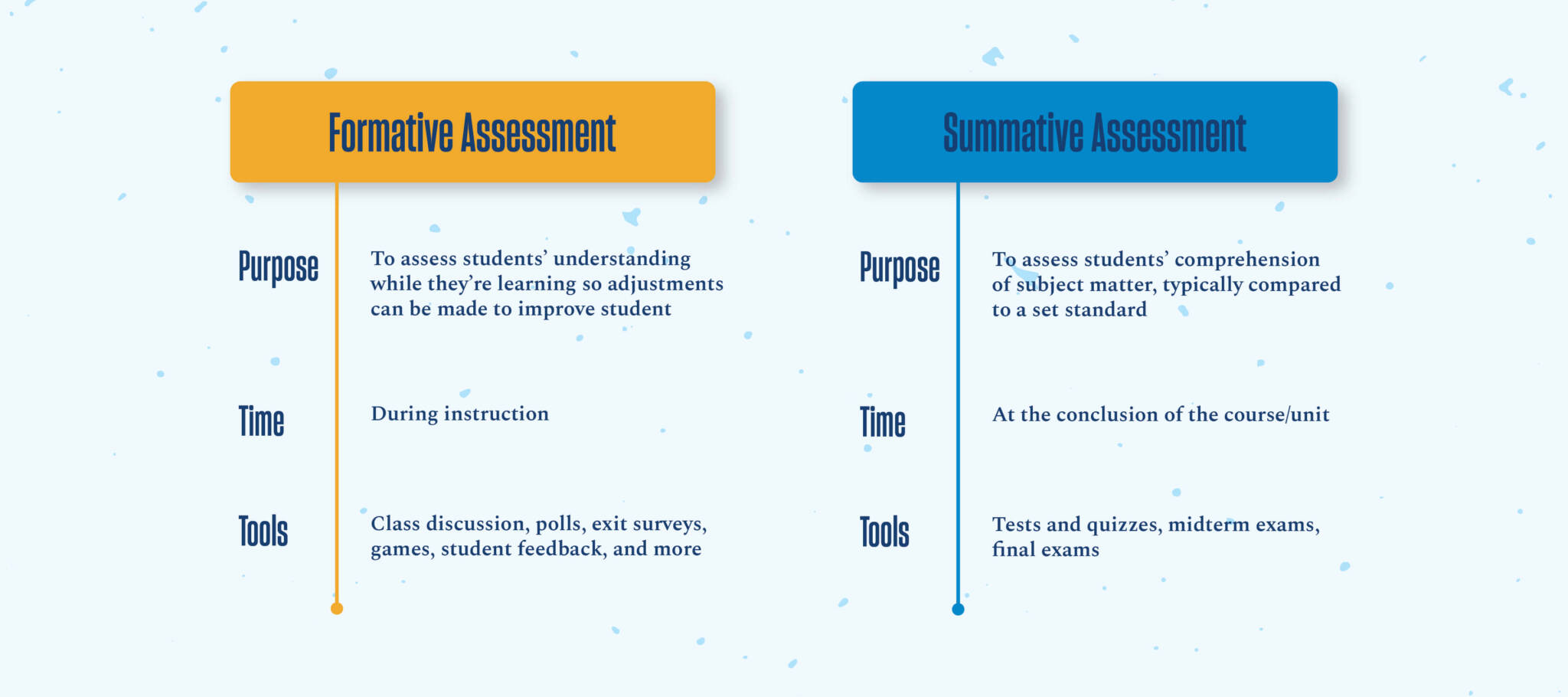
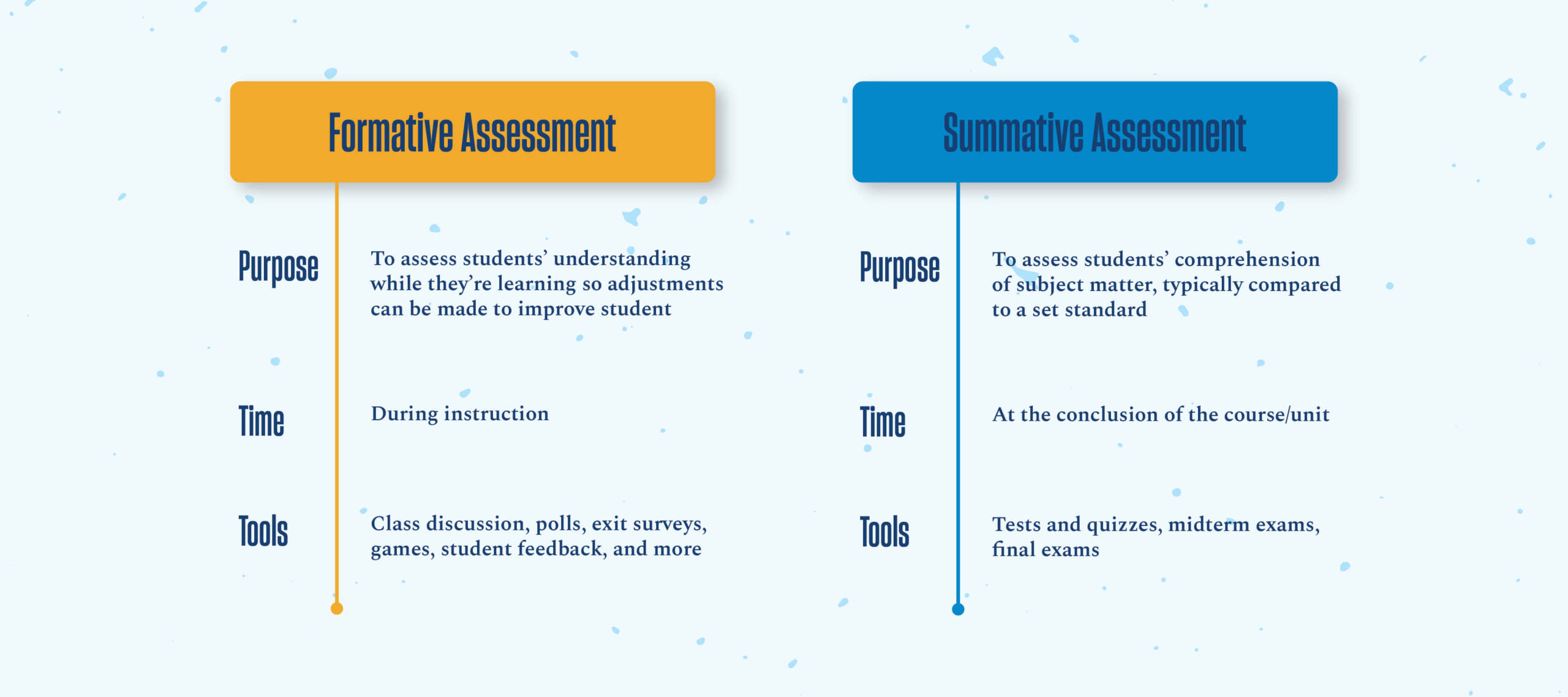
Today, we are covered by technology especially in all aspects of education, thus it also plays an important role in a revolutionary way to support assessment by making both formative and summative assessments more engaging, effective and responsible.

Technology encourages timely feedback which enables teachers to switch between different teaching techniques based on students’ actual requirements. This responsiveness can be beneficial in learning and recognizing potential deficiency areas in comparison to normal tests. However, particularly the adaptive learning interventions may customise the assessment activities in a manner, which is preferred as well as understood by the learner. https://www.igi-global.com/chapter/impact-technology-assessment-evaluation-higher/51460

Addressing Challenges and Concerns

Along with technology benefits there are some of the concerns too especially social and cultural considerations. The use of such formats of tests only serves to compound the social inequalities in education since the privation in this method is the internet and the technological literacy, which some learners can hardly get. This is a fair issue of concern in regards of the fairness of the assessment practices. Furthermore, the emphasis is placed on quantified results rather than discussions of learning with the emphasis on substantial ideas as it becomes the responsibility of the teachers that their students should consider assessments more than evaluations.

https://www.frontiersin.org/journals/education/articles/10.3389/feduc.2019.00116/full

Best Practices for Implementation

In my view, educators who likes to use technology in assessment should use several forms of assessments rather than only testing. It may include engaging in subject related content learning activities such as projects, discussions, portfolios, simulations and peer assessments rather than having only exams. Stressing on the role of feedback is critical because technologies can enable quick feedback giving to specific instructional and learning activities. Furthermore, to support the students centered learning, professional development to help educators use technology effectively in the assessment of students is important. Discussions about assessment helps students to appreciate and feel in charge of their experiences which mainly leads to relevant learning efforts throughout their studies.

My teaching philosophy

My teaching philosophy and classroom practice have been influenced by various learning theories over time. In the initial stages of my teaching career, I was significantly influenced by the behaviorism approach, which believes that knowledge is transmitted from the educator to the students through various instructional mediums. I found this approach particularly effective in the field of physical education, where students were provided with demonstrations and instructions to acquire specific skills. The idea was that they could master these skills through dedicated practice and repetition. Behaviorism is rooted in the theory of operant conditioning, as postulated by Skinner, which suggests that a specific skill can be acquired through repetitive practice and constructive feedback. As my teaching career progressed, I began to include constructivism theory and update my teaching techniques. This theoretical framework describes education as a dynamic process and highlights the idea that students gain knowledge by actively engaging with the subject matter, and the establishment of connections between their prior experiences and new knowledge. This strategy, in my opinion, represents a significant advancement in my teaching methods as I have observed that when learners assume an active role in their learning process, they are able to acquire information far more efficiently.

As a science teacher, I adopted constructivist principles in my teaching approach.I used techniques that enable the students develop their own theories, conduct assessments, and make conclusions instead of just depending on lectures.  For example, I organized a project with my chemistry students where they investigated the effects of pollutants on water quality. I  divided the students and guided them to develop research questions related to local water sources. They then designed experiments to test water samples, such as analyzing pH levels and the presence of pollutants. This project not only taught them about the chemical properties of pollutants but also encouraged collaboration and real data collection. It was a great example of how constructivism can enhance learning.

In my teaching experience, I have encountered the concept of connectivism, which recognizes the significance of digital networks in education. It emphasizes that education involves more than just traditional teaching methods; it is about learning through interaction within various networks. I incorporate a variety of digital tools in my teaching to give students new opportunities to connect to important sources of information and learn with their classmates on different platforms. These digital tools enable students to visually represent a range of ideas and insights, fostering creativity and interdisciplinary exploration. Integrating various online and social media platforms into their learning has enriched the students’ experience. Sharing resources and engaging with others has sparked creativity, leading to a positive transformation in their learning process. This environment helps them develop skills such as teamwork, communication, and group projects. Connectivism demonstrates how learning can be facilitated through networks and allow students to learn from each other’s experiences and perspectives.

Project-based learning is an educational approach that is centered around the lives of children. Projects often involve real-life issues related to their health and well-being, which helps to encourage teamwork and develop social skills. In this approach, the teacher’s role is to guide rather than direct. Children explore their interests, ask questions, and draw conclusions. As an early childhood educator in Canada, I had the opportunity to implement project-based learning, which enriched my teaching method. I helped my students develop their projects by focusing on their interests and experiences. For instance, while working on a project to study wildlife, a student was eager to learn about different animals and also wanted to incorporate a research process by creating group posters, conducting experiments, and sharing findings with teammates. This practical and child-centered approach is crucial in developing thinking skills and fostering creativity by connecting with the real world. Observing their growth through this process is a great way to make connections with the world. From my perspective, it’s crucial to promote independence and curiosity in young learners to establish a learning routine.


Caucasian girl kid playing and learning at playschool with female teacher. Mother and daughter at playroom around toys drawing with pencil colors

The Role of Productivity Suites

The Role of Productivity Suites in Shaping Tomorrow’s Workforce

Living in the world with technology, the education tools play an important role in developing critical skills. Productivity suites, such as Microsoft 365, Grammarly, Teams, Google Workspace, and some of their open-source counterparts like LibreOffice, One Note have moved beyond their initial role as task-based software into comprehensive platforms that shape digital literacy and workforce preparedness. All these productivity tools not only increase technical abilities among students but also foster creativity, time management, collaboration, and problem-solving skills needed to excel in a fast-evolving, tech-driven job market of the 21st century.

Mastering Digital Literacy

Digital literacy is not only the knowledge of using a computer or a specific device, but also the capacity to evaluate digital information and to use the tools and technologies at one’s disposal in numerous ways to solve a problem. Productivity suites are basic to this process as these suits are set of applications that students use every day which may include word processing, spreadsheets, presentations and cloud-based collaboration tools. However, these tools are used to perform tasks in the academic setting as the students get to enhance their previous, present and incoming document production abilities, management of information and the presentation abilities respectively. For example, while typing using word processing applications like Microsoft Word or Google Docs students learn the procedures of writing as well as font formatting, they also learn standard computer operations such as copying, pasting, creating links and embedding images and videos. These, of course, are not just academic skills, they are indispensable in the kind of workplaces that requires efficient and precise verbal and written communication and technical skills.

Microsoft Access, Microsoft Excel or Google Sheets are other examples of spreadsheets that go a step further and introduce students to the world of data management. They learn how information is organized, how to generate different charts, and how to perform formulas and make decisions.

As a result of this, they are building a framework of skills that are relevant in many different fields ranging from the financial sector to marketing where data is always important to decision making. The more students use most of these tools, the more they feel comfortable working in most digital spaces than worrying about the future development of the tools. Particularly, the digital literacy acquired in the course furthers the students’ application of the knowledge in practice that requires technological skills.

Building Essential Skills for the 21st Century

Today, in the modern technological era, productivity suites are a critical component in preparing employees of the future for the necessary 21st century competencies. Along with the basic functioning, these tools help to develop creativity, teamwork, problem-solving skills as well as flexibility i.e. valuable in the current global scenario. For instance, PowerPoint and Google Slides engage students in the creative process when designing presentations, in ways that are much more than just relay of information in an artistic form. The skill of presenting ideas creatively applies well in the working world as creative ideas can go a long way in an organization. Likewise, the cloud applications such as Google Workspace help students to work against the flow yet learn how to engage and what collaborative tools and platforms are suitable for handling various tasks and persons, thus preparing them for the number of organizations, which embrace the opportunities of massive remote cooperation.

Besides, productivity suites develop creativity, time management, collaboration as well as critical thinking, communication, and flexibility.

Like if the students start using spreadsheet systematically to analyse the data it may help them to take informed decisions which could play an important role in developing skills in the field of data science and other related fields. In addition, word processors and presentation software enhance student writing, presentation and organization skills as they work out how to effectively convey their thoughts determined by the mode to be used. Since these suites are dynamic, with features being added with time, the students are urged to be flexible, to be able to learn new technologies introduced in the tool. This ability to learn and adapt quickly to changes is paramount in the current world workplace where drastic changes are triggered by technology.

Preparing Students to Excel in the Workforce

Productivity suites are about more than classrooms as their uses are a pathway to the workplace. The attitudes students acquire when with these tools accurately conforms to the requirements of the immediate advancements in job market. The present and future workplace environment is fully connected through online channels to solve functional problems. By making students acquaint with these environments early enough, productivity suites assure them of the readiness for the workforce.

In the business world students, regardless of choosing finance, marketing or business, technology or even health care, productivity tools are used. From writing standard business reports and identifying business trends within organizations to presenting business performance reports on daily, monthly and quarterly basis, the students will discover that the skill learned while using the productivity suites are applicable in their future jobs.

In addition, the collaborative option of the productivity suites which makes the students ready for the workforce across the world. More people work remotely and use virtual teams, and the synchronous use of cloud-based tools will be an additional benefit as those students who have practised all of these tools in school will stand in a vantage point to help in those organizations that have adopted remote or hybrid work from home.

What’s Left Behind? Addressing the Gaps

As powerful as productivity suites are, they do come with their drawbacks. There is little chance to gain more experience in more complicated technical actions on the job. Softwares or applications such as Microsoft Office, Google Workspace and others are advanced productivity tools but the features are limited to basic to intermediary level work tools. They do not usually go deeper into core competencies such as coding or artificial intelligence, or other fields more pertinent to the digital economy which are now perceivably more applicable.

Moreover, although some of these tools encourage teamwork and innovative ideas, there are other types of business problems and analysis tasks that do not fit into these enumerated tools, or else they equip students with inadequate tools to face situations that need extensive technical knowledge or real experience with particular software types. For instance, the engineering, computer, and graphics students may likely need to learn the use of more professional applications like AutoCAD, Illustrator, MATLAB and Adobe etc which these productivity suites do not offer.

Accordingly, there is a need for the incorporation of supplementary assets and practices into the educating process to fill introduced gaps. However, effectively incorporation of technologies, such as coding platforms, tools for data visualizations, project-based learning helps students to master more complex technical skills. Further, developing opportunities for students to participate in internships, develop groups or teams that address real business situations, can help them acquire those interpersonal traits that are necessary for their success in their careers.


Productivity Suits tools offer an undeniably indispensable role in defining the future of learning and working. They equip the students with the online skills and skills in the twenty first century for better handling of the world challenges. Not only creativity, cooperation, critical thinking, and communication skills but also these tools prepare learners for future jobs. With industries transforming, education also must transform so that students are able to get more than basic computer skills they need required technological and social skills to succeed in a world that adapts in work settings. Implementing a balance between scalable and sustainable productivity solutions, necessary for creating more unique applications and enabling the acquisition of valuable real-life experiences, students will be more ready to confront a future day job.

 

A Journey Through EC&I 833 by Aatif and Gagan deep kaur

Our Reflection

Our journey about Educational Technology EC&I 833 have been a transformative experience from enhancing our understanding about EDTech to exploring new approaches of integrating digital tools in the classroom. We understand how Educational Technology has evolved from chalkboards to AI and coding and how this advancement has prioritized societal needs. As Tony Bates said Technology has reached rural areas where schools can’t reach. However, we would agree with the Neil Postman perspective about how technology comes with trade offs like Google workplace encourages collaboration but it raises a crucial concern about equity and privacy. Additionally, we discussed the important learning theories like behaviorism, collaboration and constructivism that guides us to integrate various tools like Kahoot, google docs  to foster active learning and engagement among students. Through this course, evolution from Web 1.0 to Web 3.0 was an impact topic to realize the drastic transition and experiencing AI driven learning. This transition has inspired us to think critically about how we can integrate useful tools to experience personalized learning in our classroom while considering diverse needs of our students. The topic Assistive technologies have highlighted the concept of inclusivity and how we can take care of diverse needs in our classroom. We invite you all to watch our summary of Learning video as it reflects our journey of personal experiences, insights and vision about Educational Technology.


Posted in Uncategorized

Reflecting on My Ed Tech Journey

As my journey in the EC&I 833: Introduction to Educational Technology course comes to an end, I’m all excited to share an audio narrative summarizing my learning experiences. From exploring the transformative power of assistive technologies and Universal Design for Learning (UDL) to revisiting theories of learning and embracing innovative tools like AI and coding, this course has been an enriching experience.

I’ve also discovered the value of blogging, an unexpected but exciting addition to my academic toolkit.

Creating my blog, Aysha’s Learning Lanes, has been a fulfilling journey of self-reflection and growth.

The audio narrative provides a recap of my key takeaways, reflections on the collaborative projects with my classmates, and insights into the role of technology in shaping inclusive and effective education.

🎧 Listen to my full story here: https://open.spotify.com/show/601MCvQyqq7panPELbuLW9

Thank you, Professor Katia Hildebrandt, for your guidance and for introducing us to the ever-evolving world of educational technology. This journey has inspired me to continue integrating meaningful and inclusive practices into my teaching.

Posted in Uncategorized

A Journey Through EC&I 833 by Aatif and Gagan deep kaur

Our Reflection

Our journey about Educational Technology EC&I 833 have been a transformative experience from enhancing our understanding about EDTech to exploring new approaches of integrating digital tools in the classroom. We understand how Educational Technology has evolved from chalkboards to AI and coding and how this advancement has prioritized societal needs. As Tony Bates said Technology has reached rural areas where schools can’t reach. However, we would agree with the Neil Postman perspective about how technology comes with trade offs like Google workplace encourages collaboration but it raises a crucial concern about equity and privacy. Additionally, we discussed the important learning theories like behaviorism, collaboration and constructivism that guides us to integrate various tools like Kahoot, google docs  to foster active learning and engagement among students. Through this course, evolution from Web 1.0 to Web 3.0 was an impact topic to realize the drastic transition and experiencing AI driven learning. This transition has inspired us to think critically about how we can integrate useful tools to experience personalized learning in our classroom while considering diverse needs of our students. The topic Assistive technologies have highlighted the concept of inclusivity and how we can take care of diverse needs in our classroom. We invite you all to watch our summary of Learning video as it reflects our journey of personal experiences, insights and vision about Educational Technology. 


Summary of Learning (EC&I 833) Foundations of Educational Technology: History, Theory, and Practice

I am amazed when I think back on my experience with EC&I 833: Foundations of Educational Technology: History, Theory, and Practice during my master’s. My knowledge and comprehension of the complex interactions between technology and education have both increased as a result of this training. I was completely unaware of the advancements in educational technology. The development of educational technology, from the simple early days of chalkboards and slide projectors to the advanced digital tools we use today, is evidence of human inventiveness and the unwavering quest for better learning opportunities. The theoretical foundations of instructional technology were thoroughly examined in the course. Understanding constructivism, behaviorism, and cognitivism offered a solid foundation for comprehending how diverse learning theories can be supported by various technologies. Examining the epistemological underpinnings exposed the philosophical stances that guide the use of educational technology. This investigation made me think about the wider effects of technology use, not only as a tool but also as a force for change in educational paradigms. It was both thrilling and intimidating to learn about different tools and platforms. Virtual classrooms, educational apps, and learning management systems (LMS) like Moodle and Blackboard all have unique benefits and features.

Thanks to EC&I 833, I now have a thorough understanding of the history, present, and future of educational technology. It has been a life-changing experience, reaffirming how crucial it is to use technology in teaching with consideration and theory. I can’t wait to put these insights into practice in the future, constantly adjusting to new advancements and working to provide all students with great learning opportunities.

In addition to exceeding my initial expectations, this course has given me a deep understanding of how educational technology will influence education in the future. With the knowledge and experience I have gained from EC&I 833, I am excited to continue this journey of learning and invention.

Here is the link to my ‘Summary of Learning’ EC&I 833:


Embracing AI: New Developments in Educational Technology

The introduction of AI into the world of education technology was transformative. I was very hesitant to use it at first. It felt illegal and unprofessional. I was able to work past these feeling through a conversation with a coworker who also used AI to assist in assignment creation. We talked about the fact that AI was more of an idea generator than a free resource generator. Teachers still need to use their professional autonomy to make edits and changes to AI generated work. Once I had established a sense of how to properly use generative AI, I was consistently using it for assignment ideas, creative labs, rubrics for grading assignments, and lesson plans. Additionally, AI as helped me to personalize learning for my students by scaffolding text and creating shorter summaries of lengthy readings.

One of the most time-consuming tasks as a teacher is the creation of lesson plans. Using programs such as magic school AI or chat GPT, I can generate ideas very quickly. This helps to cut planning time, as well as the creation of assignments in half. This helps to free up extra time for other administrative practices such as contacting parents, speaking with students, and additional planning for extracurricular activities.

AI as also helped me to provide more personalize learning opportunities for my students. I utilize AI to scaffold text for students so that they can better understand the class reading material. Many of the articles that I share with my students are written by university scholars. The language used in these articles can be difficult for a large majority of the public to read, never mind students at the grade ten level. AI helps to change the wording of the article so that students are not so intimidated or easily frustrated while reading. This helps to provide high level knowledge at a manageable level for my students. Furthermore, if I need to adjust the reading level further, I can do that for students I think may benefit.

Although AI can help to reduce the planning time for teachers, students are also able to utilize AI for similar processes. Students can utilize AI to create assignments and hand them in as their own work. Therefore, it is vital that teachers help students to understand that the work they are handing in is to be self-created. Teachers can then show students how to utilize AI for feedback on their writing, while avoiding plagiarism. When AI is used as feedback it can help students to strengthen their work by giving them suggestions or pointing out areas that students need to expand on their work. This can help students to gain confidence in the assignments that they are handing in to ensure they are getting the grade they want while completing honest work.

Moving into the future of educational technology, I believe that AI is going to play a large roll. I dream of a day where every student is able to have their own technology that is able to accommodate a wide variety of classes. AI would act as a personal assistant for every student to assist in their learning, not giving students answers, but helping to guide them through questions and problems. This would help to give teachers more time to work one-on-one with students who may require more help or learn in different ways. I dream of a day where AI helps to make teachers more efficient and promote student learning. Our classes are getting larger, with less help in the room. I believe students are not receiving the one-on-one assistance they need to truly strive in their learning and AI of the future can help to lessen that gap.

Solving the Two Sigma Problem: The Role of AI in Education

This week’s presentation sheds light on “Two Sigma Problem” introduced by Benjamin Bloom in 1984 highlighting the benefits of personalized learning. The findings of Bloom’s research highlighted that student who received individualized tutoring performed better than those in traditional classrooms and displayed significant improvement in academic success. The research emphasizes on tailoring instruction to each student’s unique needs by working within their Zone of Proximal Development. The major challenge is implementation of such personalized learning on a large-scale basis. However, today’s AI advancements help make personalized learning widely accessible.

As discussed in the article What is artificial intelligence (AI)?,AI, initially focused on machine learning, evolved over the past 70 years to include deep learning and generative AI to replicate human cognitive skills. Machine learning helps to make data-based predictions whereas deep learning uses neural networks to process complex information. Generative AI, latest advancement in this field, can create original content such as text, images and videos using large language models revolutionizing industries, including education.

As an educator I can resort to generative AI in my teaching practices like when creating lesson plans, generating tailored resources for diverse learning needs and even drafting feedback for students. There are AI powered tools that help improve student’s writing skills by offering real-time suggestions. I have used AI in my everyday life for time management, writing assistance, generating meal plans and even for costume pairing ideas.

Role of AI in Transforming Education Industry

One of the benefits of AI in education as discussed in the article Advantages and Disadvantages of AI in Education is that it addresses the Two Sigma Problem by providing individualized tutoring and adaptive learning experiences thus enabling students to progress at their own pace.AI systems can identify a student’s weaknesses and provide targeted exercises to improve those skills. By reducing the administrative workloads for educators, AI helps them to free up time for meaningful student interactions.The drawbacks of AI that must be considered is, it diminishes human connections and role of teacher as a mentor. As all schools or students don’t have access to the necessary technology, equity issues may arise. Data privacy concerns also arise as AI systems often require extensive data collection.

Moving down the lane, AI is all ready to transform future education by enabling even more personalized learning experiences. Future classrooms will have AI tools that support teachers in tracking each student’s real time progress and providing instant feedback. AI based concepts like augmented reality (AR) and virtual reality (VR) helps in making complex concepts more tangible and interactive. AI will essentially have an all-round influence on various aspects of our lives from healthcare and transportation to entertainment and daily decision-making. Besides navigating its growth responsibly, it’s also essential to address the challenges like ethical use, data security and equitable access.

To summarize, AI has immense potential to solve the Two Sigma Problem and enhance personalized learning. We must look forward to leveraging the strengths of AI simultaneously addressing its challenges and hence create a future where education is more effective, inclusive and equitable.

Posted in Uncategorized